
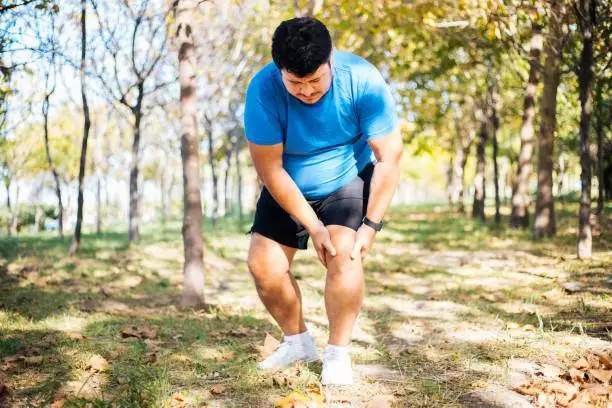
Why is Physiotherapy Best for Obese Patients with Joint Pain?
Introduction
It’s critical to your health to maintain a healthy weight. Ultimately, it lowers your chance of developing diabetes, heart disease, and cancer. However, did you know that reducing those extra pounds can help reduce arthritic pain? Losing weight tends to improve inflammation and pain in adults with osteoarthritis in their knees who are overweight. If you have osteoarthritis in your knees, Orthocure offers the greatest weight loss strategies.
People who are overweight or obese are more likely to develop knee osteoarthritis (KOA), a painful and incapacitating condition. Losing weight can ease knee strain and enhance mobility, and reduce pain. However, it’s challenging to determine which diet and exercise strategy is most effective, given the numerous possibilities. In order to determine which weight loss techniques are best for those with KOA, a recent review examined a number of them.
Why Weight Loss Matters for Knee Pain?
Additional body weight increases the strain on the knee joints. According to studies, the chance of requiring hip replacement surgery is reduced by 3% for every 1% of body weight lost. Movement, stiffness, and joint pain can all be relieved with even modest weight loss.
What the Research Looked At
Over 3,200 individuals with osteoarthritis in their knees participated in 14 clinical studies whose data were examined in the evaluation. Participants in studies lasting at least three months had a body mass index (BMI) of 25 or above. Seven different kinds of interventions were compared in the study:
- Just diet (D)
- Work out alone (E)
- Exercise and diet together (DE)
- Support from psychology (P)
- diet, exercise, and psychological support (PDE)
- Dietary Mediterranean (M)
- Methods based on medication (L)
Which Approaches Worked Best?
Participants lost some weight using all weight loss techniques, but the combination of food, exercise, and psychological support (PDE) proved to be the most successful. Those in this group lose roughly 7 kg on average. Those who merely received psychological assistance had the next best outcome, followed by those who combined exercise and diet (DE).
Only the PDE and DE groups clearly improved in terms of pain relief and improved physical function. Pain and mobility were not significantly improved by exercise or diet alone.
How Much Weight Loss is Needed?
According to the study, substantial pain reduction required a weight loss of at least 7.4% of body weight. At least 7% weight loss was required to improve physical function. You may see noticeable improvements if you lose 0.16–0.17% of your body weight every week for 44 weeks.
Benefits of Losing Weight for Joint Health
- Increased mobility: Losing weight helps lessen joint tension and strain, which facilitates movement and physical activity.
- Reduced pain: By reducing the strain on weight-bearing joints, losing extra weight can minimise the pain that comes with it.
- Improved posture: Losing weight promotes better spinal alignment and posture.
- Greater range of motion: Losing weight can improve flexibility and allow for a greater range of motion by decreasing the strain on joints.
- Delay in arthritis development: Losing extra weight might postpone the onset of osteoarthritis, a degenerative joint disease.
- Restoring Strength and Fitness Safely: Exercise advice frequently makes the assumption that anyone can just start running or join a high-intensity program. Patients who have heart disease, osteoarthritis, disc issues, or chronic sedentary behaviour typically cannot.
The beginning of a physiotherapy-guided program is rather different. Your physical therapist will:
- Assess your range of motion, strength, and balance.
- Examine any medical papers you bring from your physician or surgeon, and check your blood pressure and heart rate response as needed.
- Choose the exercises that will benefit and be safe for you.
For one individual, this might involve cycling and water-based exercise to lessen joint impact. In order to control dyspnoea, it might also entail cautious interval walking on flat surfaces interspersed with rest. The time and intensity are progressively increased as your body adjusts.
Five Strategies for Weight Loss in People with Knee Osteoarthritis
Get a Prescription for Physical Therapy
See your doctor for a referral to a physical therapist if you haven’t worked out in a long time, if you have serious comorbidities like heart disease, or if you have extreme joint pain. They can gradually guide you into the proper shapes and motions. Having a physical therapist is essential since you might not be aware that using weights to exercise your legs can exacerbate osteoarthritis in your knees.
Exercise in the Water
Being able to move pain-free is the best approach to begin an exercise regimen that you will strictly adhere to, whether you are working with a physical therapist or on your own. Swimming is an option for those with osteoarthritis in their knees. Swimming laps and pool aerobics are examples of exercises that allow the joint to flex without being subjected to weight or gravity. You can incorporate additional exercises, such as power walks, after you are self-assured and have gained some muscle.
Add Protein to Every Breakfast
Meals that combine protein and fibre are ideal, especially if you’re trying to lose weight. The best breakfast option for protein and fibre is eggs. You can have scrambled eggs with berries or prepare a vegetarian omelette.
Identify the Emotions Behind Your Overeating
Nutritionists and dietitians concentrate on providing you with information, such as suggestions for the healthiest eating regimens. Additionally, they assist you in identifying the feelings you bring to your meal, which is crucial for losing weight. They try to figure out what motivates you to eat, which is a personalised process. Having a suitable food plan is also crucial.
Keep Your Focus on the Aim
Weight loss is similar to running a marathon. Even though you can’t yet see the finish line, you still need to stay motivated. Reminding yourself of your goals, such as less knee pain, is the greatest approach to getting through this.
FAQs
What is the role of physiotherapy in obesity?
Physiotherapists can help clients learn how to lose weight as well as evaluate and design an exercise regimen. The exercise program’s main goal is to modify energy expenditure.
What exercises are good for obese people with arthritis?
They can help regulate weight, boost energy, and strengthen the heart and lungs. Walking, cycling, swimming, and water aerobics are a few cardiovascular activities that are gentle on the joints. Aim for up to 150 minutes per week of aerobic activity that is relatively challenging.
Which exercise is best for obese people?
Moving. Perhaps the greatest technique to train fat people is to walk.
cycling. You can recommend cycling to your larger clients as an additional beginner-friendly cardiovascular workout.
Swimming. Swimming is a more complicated sport that isn’t suitable for everyone in every circumstance.
What exercises are good for overweight knee pain?
Rising and Falling (Take a seat) With your feet flat on the floor and your arms either crossed or loose at your sides, depending on what feels more balanced, take a seat in a sturdy, armless chair.
Knee rolls, straight leg raises, hamstring curls, hamstring stretches, and so forth.
What exercises should overweight people avoid?
Obese people should keep away from high-intensity exercises like running, jogging, or jumping since they increase the risk of damage to joints, tendons, and cartilage. However, there are many healthy, low-impact exercise options available.
What is the best natural joint pain relief?
Inflammation and stiffness are decreased by omega-3 fatty acids. Research indicates that individuals who consumed foods high in omega-3 fatty acids or took supplements containing fish oil experienced less joint discomfort. Try plant-based sources of Omega-3 if you don’t like fish, like walnuts, flaxseed oil, and ground flax.
What vitamin deficiency causes joint pain?
Deficits in several important vitamins and minerals can cause joint pain, including vitamin D, which is essential for healthy bones and the absorption of calcium; vitamin B12, which affects nerves and walking; and minerals like magnesium, which affects muscle function, and copper, which causes inflammation. Low levels of these minerals may cause fatigue, weakness, and increased inflammation; therefore, supplements, sun exposure, and diet are essential for relief.
References:
- Orthoadmin. (2023, January 4). Losing weight and simultaneously undergoing knee pain treatment. https://www.orthocure.co.in/how-to-lose-weight-when-you-have-knee-osteoarthritis/
- Jain, C. (2025, April 12). Best Weight Loss Strategies for People with Knee Osteoarthritis. https://shop.thepfc.club/blogs/news/best-weight-loss-strategies-for-people-with-knee-osteoarthritis
- Rai, S. (n.d.). The link between obesity and joint pain: How losing weight can improve Joint health. Ruby Hall Clinic Hinjawadi | Premier Healthcare in Pune. https://hinjawadi.rubyhall.com/how-losing-weight-can-improve-joint-health/
- Dev-Synergy. (2025b, December 4). Does physiotherapy help with weight loss? Key facts you must know. Synergy Physio. https://www.synergyphysio.in/blog/does-physiotherapy-help-weight-loss/