Best Home Exercises for Weight Loss
Introduction:
Regular exercise is essential for maintaining overall health. In addition to aiding in weight management, exercise enhances bone strength, mood regulation, cardiovascular health, and overall well-being.
It’s important to understand that both diet and exercise contribute to long-term weight control. If one gets attention while the other is neglected, the body may respond differently. Examples of this include exercising regularly without changing one’s diet or adhering to a diet without exercising. This may lead to fatigue, changed metabolism, or slower progress.
Other factors, such as stress levels, sleep quality, certain medical conditions (like hypothyroidism and chronic cycle syndrome), and medications, can also impact how your body responds to weight loss efforts.
People with conditions like diabetes may benefit from diabetic exercises that are appropriate for their current state of health. Any fitness program should be discussed with a healthcare professional to ensure safety and effectiveness.
Best Exercises to Lose Weight at Home:
These popular and effective methods of exercise can help you improve your strength, fitness, and overall health at home without the need for a gym or specialised equipment.
For those attempting to control their weight, regular aerobic exercise and resistance training can be helpful when paired with a balanced, calorie-conscious diet. Resistance training at least twice a week can help maintain muscle mass while reducing weight.
Exercise time, such as working out in the morning, has been investigated in relation to weight loss and muscle growth. Early in the morning is usually when cortisol, which is a hormone with a normal daily rhythm, peaks. Its consequences are complicated, though. Stress-induced elevated cortisol levels can occasionally lead to fat retention and muscular deterioration. There is currently insufficient data to establish a universally applicable “best” time of day for exercise.
Aerobic Exercises:
Many people consider walking to be an accessible and low-impact cardiovascular workout. It can simply be included in regular activities and promote calorie burning when done at a fast speed. It is appropriate for people of all fitness levels because it is also easy on the joints.
People who walk for 50–70 minutes three times a week may eventually see slight decreases in body fat and waist circumference, according to several observational studies. However, individual factors, including food, metabolism, and general activity levels, can affect the outcome.
Running and jogging are more intense and demanding types of aerobic exercise. Improved endurance, heart health, and calorie burning may result from these exercises, which mostly work the lower body and cardiovascular system. Running and jogging differ mostly in speed; running usually begins at about 10 km/h, while jogging usually varies from 6 to 9 km/h.
Although exact numbers vary depending on body weight, intensity, and terrain, an individual may burn roughly 298 calories in 30 minutes of jogging and 372 calories in 30 minutes of running. Although these workouts can help reduce body fat generally, it’s crucial to remember that fat loss from certain locations, like the belly, cannot be directly targeted and instead relies on overall fat reduction and individual physiology.
Running and jogging can help maintain muscle tone, particularly in the lower body, although structured strength-based workouts or resistance training are usually needed to achieve notable increases in physical strength.
Exercise Steps:
Include these workouts in your routine and set aside an hour of your time.
- Start with a 15-minute walk.
- For the next fifteen minutes, pick up the speed and begin running.
- Run for an additional fifteen minutes at an even rate.
- For ten minutes, slow down and restart jogging.
- Walk for five minutes while letting your body relax and slowing down.
Skipping or Jumping Rope:
While skipping can assist with calorie expenditure and muscular conditioning, focused resistance training is necessary for major gains in muscle strength. It is not a replacement for expert mental health care, but it might help with mood and stress management.
Individual outcomes may differ based on fitness level, diet, and consistency, just like with any exercise.
Exercise Pattern:
- Stand with your back straight on a level surface.
- Verify that your feet are pointed upward and straight.
- Keep your hands near your thighs, straight, and pointing down.
- Jump off the ground, allow your rope to go beneath your feet, and then recover it.
- Keep repeating this while gradually increasing the speed at which you jump.
Plank:
A core stabilization exercise, the plank works the abdominals, shoulders, back, chest, and hips, among other muscle groups. Although its appearance of simplicity, it may be physically taxing when done correctly and requires great muscular endurance.
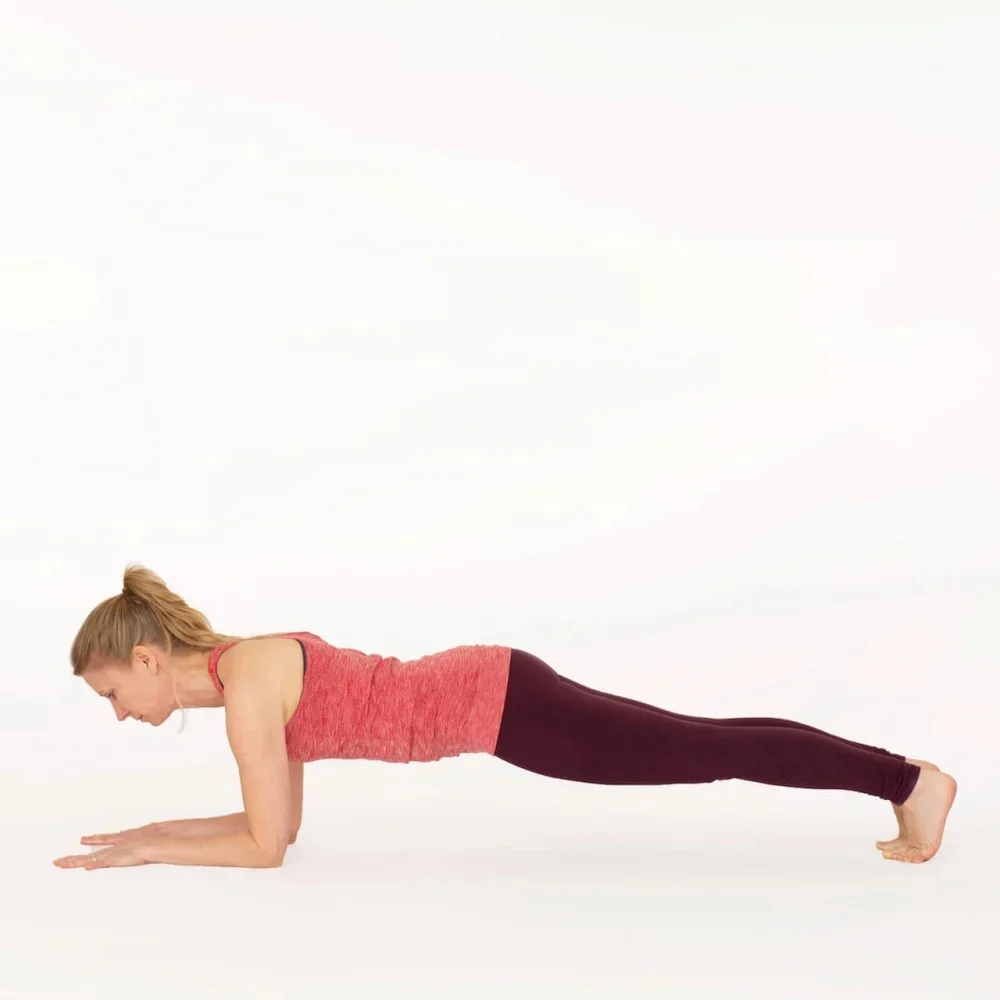
Planks are available in a variety of shapes to target different muscle groups and assist in enhancing posture, body balance, and core strength. Planks are useful for improving overall stability and muscular endurance, but they are not designed for direct fat loss or high-calorie burn.
Improved functional strength and support in other types of exercise may result from increasing the length and regularity of plank practice.
Plank Exercise Variations:
The Standard Plank: This exercise, often called the Extended Arms Plank, is very beneficial for beginners looking to build stronger core muscles. It helps with digestion and improves metabolic activity. The Forearm Plank is a comparable version that works the same muscle areas. The main goals of this exercise are to strengthen the back, shoulders, arms, and core.
The Mountain Climbers: Mountain Climbers is a full-body workout that helps burn excess calories and reduce body fat. They are recognized as a more difficult form of plank exercises. The biceps, hamstrings, core, triceps, and chest are the main muscular groups used in this workout.
Exercise Pattern:
- Start in the conventional plank posture, which is also known as the push-up position.
- Raise your right knee to your chest by bending it.
- Extend your right leg to return to the starting point position.
- Raise your left knee toward the direction of your chest and repeat the motion.
- Put your left leg back where it was before.
- For about 20 to 25 repetitions, keep switching legs.
The Reverse Plank: This exercise is a reverse version of the conventional plank. It’s a great technique to stretch the body and burn calories and extra fat. The core, shoulders, back, chest, and gluteal muscles are also strengthened by this exercise.
Exercise Pattern:
- Spread your legs wide in front of you and take a seat.
- To support your upper body, place your hands behind your hips.
- Now straighten your hands, raise your hips, and place your body in a straight line.
- Maintain this posture for forty to sixty seconds.
- Approximately twenty to thirty times, repeat these procedures.
Push-Ups and Pull-Ups:
Push-ups are a popular bodyweight strength exercise that can be done almost anywhere and don’t require any equipment. They assist in developing upper body strength and muscular endurance by mainly focusing on the chest, triceps, shoulders, and core.
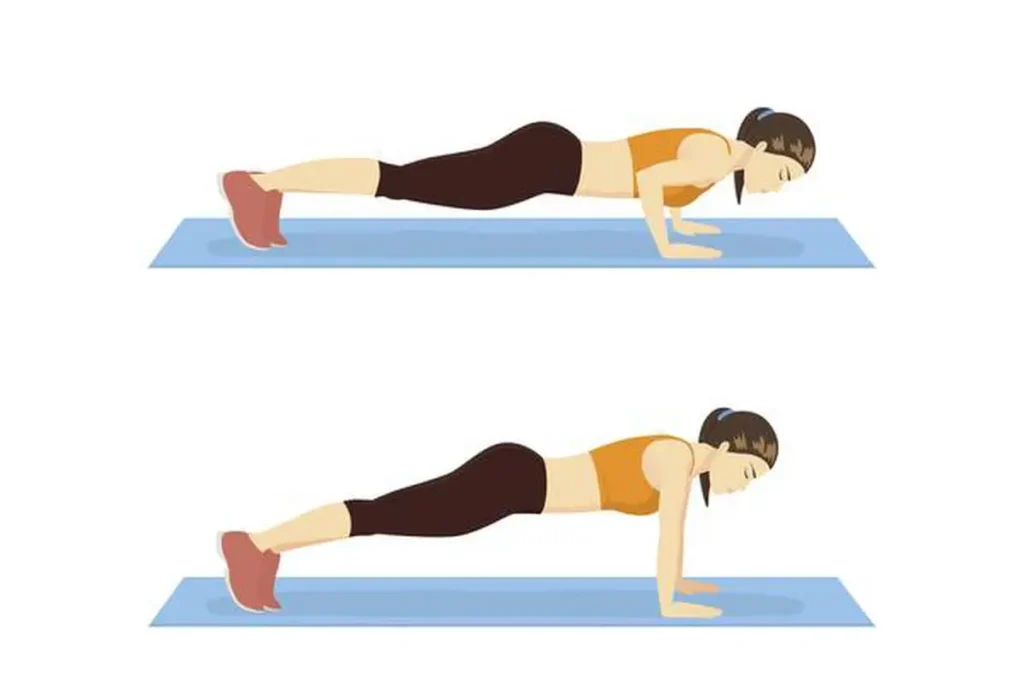
Push-ups help build muscle, which may benefit long-term weight management by slightly raising resting metabolic rate, even though they do not burn as many calories as aerobic workouts.
Regular push-up training may boost general strength and stability, particularly when paired with other types of exercise like resistance or cardio.
Exercise Pattern:
- Select flat, non-slip surfaces.
- Your hands should be somewhat bigger than your shoulders and looking forward.
- Now straighten your hands, raise your hips, and connect your body in a straight line.
- Now push back, straighten your arms, and bend your shoulders as low to the floor as you can.
- For three sets of fifteen repetitions, repeat these steps.
Push-ups are a popular bodyweight strength exercise that can be done anywhere and don’t require any equipment. They help build upper body strength and improve muscular endurance by focusing mainly on the chest, triceps, shoulders, and core.
Push-ups help build muscle, which may benefit long-term weight management by slightly raising resting metabolic rate, even though they do not burn as many calories as aerobic workouts.
Regular push-up training can enhance general strength and stability, especially when paired with other types of exercise like resistance or cardio.
Exercise Pattern:
- With your arms completely extended, hold the pull-up bar while standing straight.
- Pull yourself up till your chin is above the support by slightly bending your knees.
- Return to the starting posture with control by lowering yourself gradually.
- Perform four sets of 15 repetitions of this exercise.
Squats:
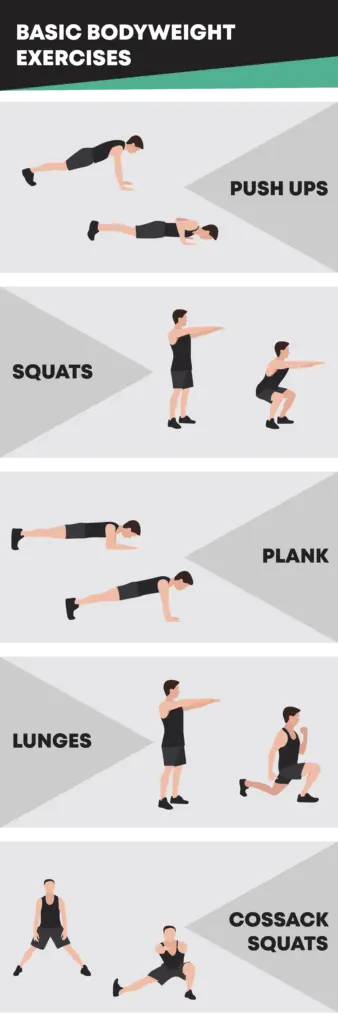
A lower-body strength exercise that mainly works the thighs, hips, and glutes is the squat. They are an essential component of many fitness programs because they enhance muscular endurance, mobility, and balance.
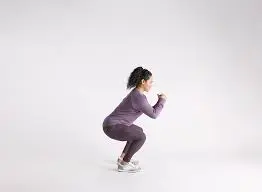
Squats are mostly beneficial for strengthening the lower body, while they may also help with muscle toning and calorie burning. In order to prevent injury and maximize efficacy, beginners are frequently recommended to begin with three sets of 12–15 repetitions, paying close attention to perfect form.
Exercise Steps:
- With your toes pointed forward and your feet more than your hips, stand straight.
- Bend your ankles and knees.
- Make sure your toes and heels stay in contact with the floor as you lower yourself into a squat position.
- Keep your upper body parallel to the floor while maintaining a 90-degree bend in your knees.
- To straighten your legs and get back to standing, push through your heels.
Lunges:
A lower-body strength training exercise, lunges work the quadriceps, glutes, hamstrings, and core for stability. They work well for increasing lower-body endurance, balance, coordination, and lean muscular mass.
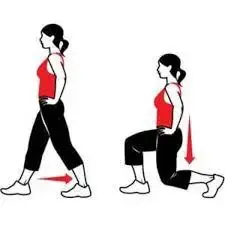
Lunges are mostly used for toning and strengthening, while they can be a part of a fat-loss program when incorporated into a high-intensity exercise. Their efficacy can be further increased by adding weights, particularly for athletic training and increased general fitness.
Exercise Pattern:
- Maintain a straight position with your back and abs.
- Holding your right leg in front, bend your knee.
- Now bend your knee so that your right thigh is parallel to the ground and your left thigh is horizontal to it.
- Maintain your front knee above your heel.
- Put your feet together when you return.
- Use your left leg to repeat the previous steps.
- Alternating lunges for 30 repetitions are highly beneficial.
In addition to the activities you must perform at home to lose weight. Some additional elements and strategies can be useful in managing weight.
Yoga:
Yoga is an age-old discipline that combines relaxation, awareness, controlled breathing, and physical postures. Yoga may help with weight management, improve mental health, and increase body awareness when paired with regular exercise and a good diet.
Yoga supports stress reduction, which can have a favorable impact on lifestyle choices, even if it is not primarily focused on burning calories. Certain types of yoga, like yoga for diabetes, may also promote flexibility, balance, and metabolic health, making it a beneficial supplement to a comprehensive wellness regimen.
In addition to assisting with weight management, yoga has several other benefits, including:
- Better cardiovascular health
- Increased muscle tone
- Regulated metabolism
- Improved breathing
- Increased mobility
- Reduce stress
Certain yoga poses help with weight management by improving balance, focus, and muscle tone. Frequent practice aids in the body’s adaptation to these motions, helping you to progressively increase your strength, flexibility, and mind-body awareness—all of which enhance your general fitness and well-being.
The following are a few yoga poses that are recommended for weight loss:
- Warrior Pose
- Trikonasana (Triangle Pose)
- Shoulder position
- Bridge position
- Bow position
- Plank position
- Downward dog pose
- Sun Salutation
Calories Burned with Different Exercises:
The approximate number of calories burned throughout different workouts, based on moderate intensity, is provided below. Body weight, age, fitness level, exercise intensity, and length are some of the variables that can affect actual values.
- Walking: 30 minutes of walking at 4 mph10 provides 135–189 calories.
- Jogging/Running: 240–336 calories per half an hour.
- Skipping Rope: 226–503 calories per hour, depending on speed and weight.
- Yoga: 120–168 calories every half an hour. 10 (strongly affected by the nature, level of intensity, and length of the session)
Best Time to Exercise:
The most important aspect is consistency; even if many people prefer to work out in the morning, especially on an empty stomach, because they think it may help with fat metabolism. Over time, better sleep and habit compliance can be supported by morning workouts that help match your daily clock.
According to some research, exercising in the evening could improve performance since it raises body temperature and increases oxygen efficiency. Research is still insufficient, though. In the end, the ideal time to work out is when it works best for your schedule and way of life, enabling you to maintain a regular and sustainable level of physical activity.
Diet Tips for Weight Loss:
To make sure that your at-home weight loss program is executed correctly, follow these guidelines:
Be clear of trendy diets that promise rapid results; they can be harmful to your health and typically don’t work.
Exercise caution while using belts, pills, or “magic” methods to lose weight. Many of these can be detrimental and only have temporary results. Recall that there are severe legal restrictions on the usage and sale of such products.
You should never starve yourself. Missing meals can slow down your metabolism and lead to issues like nausea, fatigue, and acidity.
Summary:
Exercises that are easy, regular, and focus on large muscles can be quite successful in helping people lose weight at home. Without the need for any equipment, the greatest at-home workouts mix cardio, strength training, and core activation to increase metabolism, burn calories, and improve general fitness.
FAQ:
Which workout burns the most abdominal fat?
Aerobic exercise is any activity that raises your heart rate, such as swimming, dancing, running, or walking. Playing with your kids, gardening, and cleaning the house could all qualify under this category. Exercises that assist in reducing belly fat include yoga, mat work, and strength training.
Is the seven-minute workout effective?
In that sense, the 7-minute workout is effective since, by definition, you are becoming more fit. The 7-minute workout could be your entry point into the wider community of exercise, whether you’re just starting, have limited time, or simply need something quick and simple to get started.
How can I lose weight the fastest?
One of the greatest ways to lose body fat is to engage in regular cardiovascular exercise, like brisk walking. Engage in aerobic activity for at least half an hour most days of the week. To reduce weight and maintain it, some people might require more exercise than this. Try to engage in strength training exercises at least twice a week as well.
What is the recommended daily intake of water?
Women should drink about 1.6 liters of water per day, compared to nearly two liters for men. That equals about ten 200 ml glasses for males and eight 200 ml glasses for women. However, you’ll need to drink more if you’re exercising or it’s hot outside—that is, if you’re sweating more.
References:
- Bisht, H. (2025, November 12). 7 best exercises to lose weight at home. PharmEasy Blog. https://pharmeasy.in/blog/7-best-exercises-to-lose-weight-at-home/
- Lawler, M. (2023, July 14). The best Fat-Burning Exercises for home and the gym. EverydayHealth.com. https://www.everydayhealth.com/fitness/the-best-fat-burning-exercises-for-at-home-and-the-gym/