
MIND Diet
What is the MIND diet?
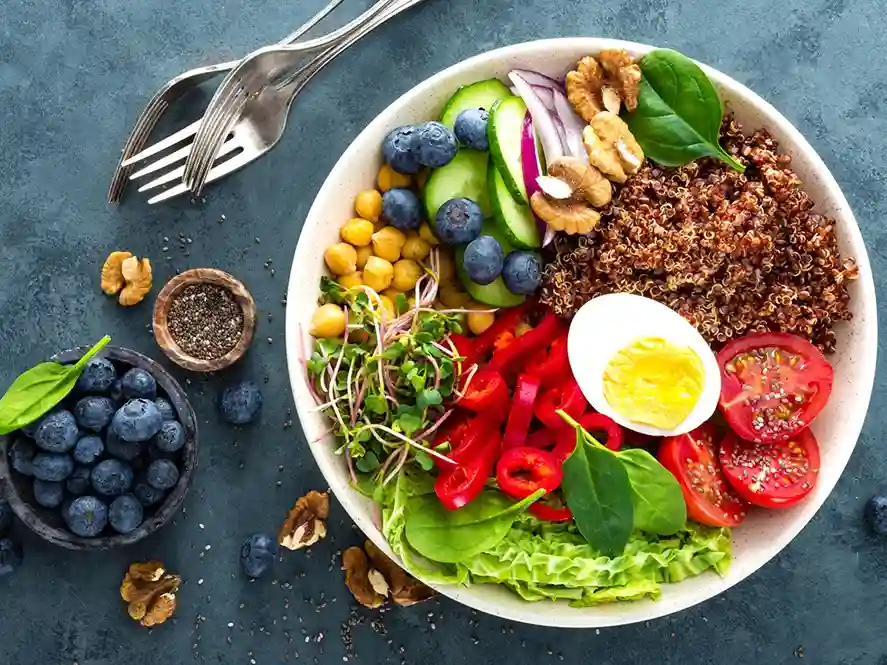
The MIND diet emphasizes avoiding foods that cause premature aging, such as baked goods and red meat, and consuming nutrients that directly assist the brain, such as grains, leafy greens, and berries.
Preventing cognitive decline is the primary goal of the MIND diet. Meals from the MIND diet are rich in fiber, vitamin E, folate, omega-3 fatty acids, carotenoids, and flavonoids. All of these may improve the general health of your brain.
The goal of the MIND diet is to lessen dementia and the deterioration of brain function that frequently happens as people age. It incorporates elements of the Dietary Approaches to Stop Hypertension (DASH) diet and the Mediterranean diet, two highly popular diets.
Benefits
The advantages of the DASH and Mediterranean diets have been well researched, and the MIND diet may be just as promising.
The MIND diet could
- Lower your risk of Alzheimer’s disease and dementia.
- Reduce your blood pressure.
- Improve your memorization.
According to research, adhering to the MIND diet significantly lowers the risk of Alzheimer’s disease by 53%. Additionally, people who moderately adhere to the MIND diet reduce their risk by 35%.
Individuals who adhere to the MIND diet have also experienced reduced brain fog, greater focus, and improved cognition.
According to researchers, the MIND diet reduces inflammation and oxidative stress in the body, which may be beneficial for both the heart and the brain.
Additionally, the MIND diet is excellent for heart health. It promotes healthy arteries, which improves blood flow to various parts of the body. “When large areas are cut off from blood flow, people can suffer from heart attacks and strokes.”
How to follow it
The MIND diet focuses on consuming minimally processed plant-based meals while reducing animal-based foods that are heavy in added sugar and saturated fats.
One more reason the MIND diet is a fantastic concept? It’s adaptable. The rules are exactly that—rules. You might benefit from the MIND diet even if you don’t adhere to it strictly.
Berries
At least twice a week, you should have a serving of berries, such as strawberries, blueberries, blackberries, and raspberries.
Berries are typically rich in antioxidants and fiber. Eating half a cup of blueberries or raspberries rather than just watermelon or bananas will greatly boost your antioxidant power.
Leafy greens
Six or more servings of leafy greens should be consumed each week.
Kale, arugula, and spinach are examples of leafy greens that are rich in antioxidants and have a little more fiber than most other vegetables. It’s quite similar to the reasoning behind berries.
All other vegetables
Try to eat at least one serving of every other vegetable each day.
Choose bright, non-starchy veggies such as tomatoes, carrots, and cucumbers.
Whole grains
Aim for three or more servings of whole grains, such as oatmeal and quinoa, each day.
“Nutrients and fiber can be found in whole grains. Compared to white bread, rice, and noodles, they are less inflammatory. A lot of those overly processed grains are bad for our brains.
Beans
Try to consume four servings or more of beans per week. This includes choices like kidney beans, pinto beans, lentils, and black beans.
Beans have both protein and fiber. You’re probably reducing your animal protein intake, particularly if you’re getting your protein from beans. For eg, you may change a black bean burger. It’s an excellent way to get healthy protein, boost your fiber intake, and possibly reduce animal protein, which is higher in saturated fat.
Nuts
Consuming five or more servings of nuts per week is the aim.
Additionally, you are free to choose any kind of almonds, walnuts, or pistachios.
However, you should be careful to limit the amount of nuts you consume. “Some nuts may be high in calories.”
Fish
At least one serving of fish should be consumed per week.
Because most fish include omega-3 fatty acids, which support healthy brain function, it’s an excellent choice.
Because they include omega-3 fatty acids, fatty fish like salmon, trout, mackerel, and sardines are healthier. However, any fish will do. Fish consume phytoplankton, which is full of nutrients that lower inflammation in the body and brain.
Poultry
Try to eat at least two servings of chicken per week.
It all depends on how you cook your chicken or turkey, but poultry is a source of healthy protein.
A chicken or turkey breast with no skin and all the visible fat removed is ideal. “We aim to get rid of saturated fat. A large portion of the fat we consume from animal sources, aside from fish, is saturated fat, which can worsen arterial health and increase inflammation.
You can also consume eggs. Egg yolks include the B vitamin choline, which supports normal brain function.
Olive oil
When cooking, use extra-virgin olive oil instead of butter or margarine.
Foods to limit or avoid
The following foods should be limited or avoided according to the MIND diet:
Red meats
Red meat, including beef and pork, has been shown to raise inflammation, which may have an impact on memory as we age.
Butter and stick margarine
Research indicates that “small amounts of high-quality butter are OK on occasion.” “However, I advise avoiding margarine and products made with soybean, corn, and cottonseed oils because they are extremely high in pro-inflammatory omega-6 fatty acids.”
Our bodies and brains become more inflamed when we consume omega-6 fatty acids.
Cheese
Saturated fats and salt are often found in high concentrations in cheese. Cheese should only be consumed in modest quantities from superior goods, such as those derived from animals fed grass.
Pastries and sweets
Consider pastries and other sweets as an occasional treat rather than a regular one.
“If it’s your birthday, celebrate it. “However, these products are entertaining rather than nourishing.”
Use whole-grain flour, dark chocolate, fruit, and oats if you’re baking anything sweet.
The majority of store-bought sweets are composed of highly processed oils and stripped carbohydrates, which raise your risk of dementia, waste insulin, and cause blood sugar spikes.
Deep-fried or fast food
Yes, French fries and fried chicken are what we mean. Stripped carbohydrates and pro-inflammatory oils are the foundation of these dishes.
“Pay attention to the words: Fast food, for example, isn’t food; it’s quick. Junk food is just that—junk. If you must qualify it, it is typically not food. “Therefore, advise consuming these kinds of foods occasionally.”
A sample meal plan for 1 week
The MIND diet doesn’t require complicated food preparation.
Try to avoid the five foods that the plan suggests limiting and concentrate your meals on the ten foods and dietary groups that are recommended.
To get you started, consider this 7-day meal plan:
Monday
- Breakfast: Raspberries and chopped almonds with Greek yogurt
- Lunch: Mediterranean salad with grilled chicken, whole wheat pita, and a dressing made with olive oil
- Dinner: Brown rice, black beans, fajita veggies, grilled chicken, salsa, and guacamole make up this burrito bowl.
Tuesday
- Breakfast: Whole wheat bread with scrambled eggs and almond butter
- Lunch: Blackberries, carrots, and a grilled chicken sandwich
- Dinner: Brown rice, a side salad dressed with olive oil, and grilled fish
Wednesday
- Breakfast: Hard-boiled eggs and steel-cut oats with strawberries
- Lunch: Mexican-style salad with grilled chicken, black beans, corn, red onion, mixed greens, and a dressing made with olive oil
- Dinner: chicken and vegetable stir-fry, brown rice
Thursday
- Breakfast: Greek yogurt with banana and peanut butter
- Lunch: Black-eyed peas, collard greens, and baked trout
- Dinner: whole wheat spaghetti with marinara sauce, turkey meatballs, and a side salad dressed with olive oil
Friday
- Breakfast: Omelet with onions & peppers, whole wheat bread with avocado
- Lunch: chili prepared using ground turkey
- Dinner: Greek-seasoned baked chicken, whole wheat dinner rolls, oven-roasted potatoes, and a side salad
Saturday
- Breakfast: Almond butter, strawberries, and overnight oats
- Lunch: Brown rice, coleslaw, pinto beans, and whole wheat tortillas with fish tacos
- Dinner: Whole wheat pita with chicken gyro, cucumber, and tomato salad
Sunday
- Breakfast: Apple slices with peanut butter and spinach frittata
- Lunch: Carrots, celery, and hummus on a tuna salad sandwich made with whole wheat bread
- Dinner: Lentils, brown rice, curry chicken, and an accompanying salad
Olive oil isn’t the main ingredient in most store-bought salad dressings, but you can easily make your own at home.
Mix one part balsamic vinegar with three parts extra-virgin olive oil to produce a basic balsamic vinaigrette. Mix thoroughly after adding a small amount of Dijon mustard, salt, and pepper.
FAQs
Which five foods should be avoided when following the MIND diet?
The Mediterranean and DASH diets are combined in the MIND diet to enhance brain function and lower the risk of dementia. This diet limits butter, cheese, red meat, fried foods, and sweets while promoting the consumption of foods like fish, berries, almonds, green leafy vegetables, and olive oil.
What vegetables are on the MIND diet?
The MIND diet includes beans, almonds, one or more servings of fish per week, berries above other fruits, and vegetables, particularly green leafy vegetables like spinach, romaine lettuce, and kale. Vegetables, fruits, legumes, nuts, and at least three servings of fish each week make up the Mediterranean diet.
What is not allowed on the MIND diet?
The MIND diet places a lot of emphasis on what foods to eat, but there are also some items that people are advised to avoid. Refined grains and processed meats are examples of highly processed foods. Saturated fat can be found in fried foods, butter, margarine, red meat, and full-fat cheese.
Which fruit is the one that might be able to stop dementia?
These advantages have been shown in middle-aged people with SCD and insulin resistance, indicating that regular blueberry supplementation, when started early in at-risk persons, may help prevent cognitive loss.
What are the 7 habits to avoid dementia?
exercising frequently.
eating a good diet.
Avoid smoking.
preserving a healthy weight.
regulating blood pressure.
Having normal cholesterol levels.
preserving normal blood sugar levels.
What slows down dementia?
Chronic diseases like dementia can be prevented, postponed, or managed by regular exercise. Experts advise adults to engage in at least 20 minutes of physical activity per day, or 150 minutes per week.
What are the best snacks for dementia patients?
Try easy-to-eat bite-sized items like fish sticks, chicken nuggets, tuna sandwiches, orange segments, steamed broccoli, or bits of cauliflower. Alternatively, prepare a sandwich-style lunch so that the person can serve himself more easily.
References:
- Rd, K. P. P. (2025, February 7). The MIND Diet: A detailed guide for beginners. Healthline. https://www.healthline.com/nutrition/mind-diet
- The MIND diet. (n.d.). https://www.eatright.org/health/wellness/healthful-habits/the-mind-diet
- Clinic, C. (2025, July 1). The MIND Diet: What to know. Cleveland Clinic. https://health.clevelandclinic.org/mind-diet-boost-memory