Abdominal Fat
Abdominal Fat/Abdominal obesity
The human condition known as abdominal obesity, also called central or truncal obesity, is characterized by an excessive accumulation of visceral fat around the stomach and abdomen, to the point where it may be harmful to the bearer’s health. Cardiovascular disease, Alzheimer’s disease, and other metabolic and vascular disorders have been closely associated with abdominal fat.
Type 2 diabetes is strongly associated with visceral fat, central abdominal fat, and waist circumference.
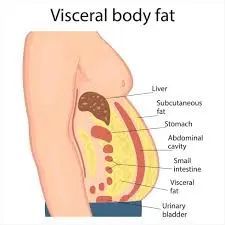
Visceral fat, referred to as organ fat or intra-abdominal fat, is situated within the peritoneal cavity, interconnected between internal organs and the body, in contrast to subcutaneous fat, located beneath the skin, and intramuscular fat, dispersed among skeletal muscle. Mesenteric, epididymal white adipose tissue (EWAT), and perirenal fat are some of the adipose depots that make up visceral fat. Central obesity, also referred to as the “pot belly” or “beer belly” effect, is an excess of visceral adipose fat that causes the abdomen to protrude excessively. In contrast to “pear-shaped” bodies, which have fat accumulated on the hips and buttocks, this body type is sometimes referred to as “apple-shaped”.
In the 1980s, researchers began to concentrate on abdominal obesity after realizing its significant link to diabetes, dyslipidemia, and cardiovascular disease. Compared to general obesity, abdominal obesity was more strongly associated with metabolic dysfunctions linked to cardiovascular disease. Insightful and powerful imaging methods were developed in the late 1980s and early 1990s, further advancing understanding of the health hazards associated with body fat buildup. The bulk of adipose tissue in the abdominal region could be divided into intra-abdominal fat and subcutaneous fat using methods like computed tomography and magnetic resonance imaging.
Health dangers
Heart conditions
A statistically significant increased risk of heart disease, hypertension, insulin resistance, and type 2 diabetes is generally linked to abdominal obesity (see below). The chance of dying also rises with an increase in the waist-to-hip ratio and total waist circumference. Abdominal obesity, blood lipid abnormalities, insulin resistance, inflammation, type 2 diabetes, and an elevated risk of cardiovascular disease are all linked to metabolic syndrome. Intra-abdominal fat is now widely thought to be the depot that carries the most health risk.
According to recent validation, estimations of total and regional body volume have a positive and significant correlation with cardiovascular risk biomarkers, and BVI computations have a significant correlation with all cardiovascular risk indicators.
Diabetes.
The precise cause and mechanism of type 2 diabetes are the subject of multiple theories. Individuals with central obesity are known to be at risk for developing insulin resistance. Adipokines, a class of hormones secreted by abdominal fat that may potentially affect glucose tolerance, are very active hormones. However, type 2 diabetes mellitus (T2DM) has been demonstrated to benefit from and be protected by adiponectin, an anti-inflammatory adipokine that is found in lower concentrations in obese and diabetic people.
One of the main characteristics of type 2 diabetes is insulin resistance, and both insulin resistance and T2DM are associated with central obesity. Insulin resistance is directly correlated with elevated serum resistin levels, which are a result of increased adiposity (obesity). Additionally, research has shown that resistin levels and type 2 diabetes are directly correlated.
Additionally, core obesity, or waistline adipose tissue, appears to be the primary form of fat deposits, causing an increase in serum resistin levels. On the other hand, it has been observed that after medical therapy, serum resistin levels decrease with decreasing adiposity.
Asthma attack
Another major worry is the development of asthma as a result of abdominal fat. The airway narrows and the muscles tighten as a result of breathing at reduced lung volume. Because of the weight on the chest and the effect of abdominal obesity on flattening the diaphragm, obesity reduces chest expansion, which results in lower tidal volumes.
Obese persons are known to breathe rapidly, frequently, and in small amounts of air. Obesity also increases the risk of hospitalization for asthma. According to research, 75% of emergency room patients receiving treatment for asthma were either obese or overweight.
Abdominal obesity and Alzheimer’s disease are strongly correlated, and the risk of Alzheimer’s disease increased when metabolic parameters were taken into consideration. Obesity was linked to an almost tenfold increased risk of Alzheimer’s disease, according to logistic regression studies.
Additional risk factors for health
Central obesity may result from secondary causes (often protease inhibitors, a class of drugs used to treat AIDS) or from lipodystrophies, a category of disorders that are either hereditary. Patients with polycystic ovarian syndrome (PCOS) frequently experience central obesity, which is a sign of Cushing’s syndrome.
Dyslipidemia and glucose intolerance are linked to central obesity. An individual’s abdominal cavity would produce increased free fatty acid flow to the liver once dyslipidemia became a serious issue. Abdominal adiposity has an impact on non-obese individuals as well as those who are obese, and it also increases insulin sensitivity.
Causes
Diet
Net energy imbalance, which occurs when an organism consumes more useable calories than it expends, wastes, or eliminates through elimination, is now thought to be the direct cause of obesity. According to some research, consuming too much fructose is linked to visceral obesity, lipid dysregulation, and reduced insulin sensitivity. There is evidence that when free fructose is present during the maturation of children’s fat cells, more of these cells develop into fat cells in the abdominal area. Additionally, it reduced the sensitivity of both subcutaneous and visceral fat to insulin. When compared to comparable glucose ingestion, these effects were not diminished.
Consumption of trans fat from industrial oils has been linked to increased waist circumference and weight in women and increased abdominal obesity in males. When fat and calorie intake were taken into consideration, these correlations remained unchanged. Even after controlling for calories, eating more meat (processed meat, red meat, and poultry) has been positively linked to weight growth, particularly abdominal obesity. On the other hand, research indicates that even when body mass stays constant, eating oily fish is inversely correlated with both the distribution of abdominal fat and overall body fat. Similarly, even when calorie intake is maintained, postmenopausal women who consume more soy protein have lower levels of abdominal fat.
Ultra-processed meals have been shown in numerous major studies to have a favorable dose-dependent connection with both general and abdominal obesity in both men and women. Eating a diet high in unprocessed and minimally processed foods is associated with a lower risk of obesity, a smaller waist circumference, and fewer chronic illnesses. American, Canadian, Latin American, Australian, British, French, Spanish, Swedish, South Korean, Chinese, and Sub-Saharan African populations all agree with these findings.
The impairment of lipid and carbohydrate metabolism seen in high-carb diets is significantly influenced by obesity. Additionally, it has been demonstrated that the percentage of central abdominal fat is inversely correlated with the amount of high-quality protein consumed over a 24-hour period and the number of times the essential amino acid threshold of roughly 10 g has been reached. The ratio of necessary amino acids to daily dietary protein is known as quality protein absorption.
Consumption of alcohol
According to a study, alcohol use is closely linked to waist circumference and an increased risk of abdominal obesity in males but not in women. Even after establishing a lower number of drinks per day to characterize women as consuming a high quantity of alcohol, it was found that increasing alcohol consumption significantly increased the risk of exceeding recommended energy intakes in male participants after controlling for energy under-reporting, which has somewhat attenuated these associations. However, this was not the case for the small number of female participants (2.13%) with elevated alcohol consumption. To find out if there is a substantial correlation between alcohol intake and abdominal obesity in women who drink more, more research is required.
At low or moderate intake levels (less than ~500 mL/day), a systematic review and meta-analysis did not discover evidence of a dose-dependent association between beer consumption and either abdominal or general obesity. However, a higher level of abdominal obesity seemed to be directly linked to heavy beer drinking (above ~4 L/wk), especially in men.
Other factors
Abdominal obesity is becoming more common in both Western and developing nations, where it is linked to population urbanization and may be caused by a mix of high-calorie foods and inactivity.
Endocrine-disrupting chemicals, dietary estrogenic substances, and maternal smoking are examples of additional environmental influences that may possibly be significant.
Central obesity is another consequence of hypercortisolism, such as in Cushing’s syndrome. Central obesity can also arise from the side effects of many prescription medications, including dexamethasone and other steroids, particularly when high insulin levels are present.
Strategies for Reducing Abdominal fat and Improving Your Health
Keeping your stomach slim can prolong your life in addition to improving your appearance. A higher risk of diabetes, heart disease, and even cancer is associated with larger waistlines. Both blood vessel function and the quality of sleep are enhanced by losing weight, particularly abdominal fat.
When you diet, you can’t directly target abdominal fat. However, lowering weight in general will help reduce your waist circumference; more significantly, it will help reduce the hazardous layer of visceral fat, which is a sort of fat in the abdominal cavity that is invisible but increases health risks.
Here’s how to focus on what’s really important.
Reduce carbs rather than fats.
For six months, Johns Hopkins researchers examined the effects of a low-carb diet versus a low-fat diet on the heart. Both diets had the same number of calories, but those on the low-carb diet lost an average of 10 pounds more than those on the low-fat diet (28.9 pounds versus 18.7 pounds). A further advantage of the low-carb diet is that it results in better-quality weight loss. Although fat is decreased when weight is lost, lean tissue (muscle) is frequently lost as well, which is undesirable. Both diets resulted in the loss of two to three pounds of healthy lean tissue in addition to the fat, indicating that the low-carb diet had a significantly higher fat loss percentage.
Consider an eating plan rather than a diet.

In the end, Stewart advises choosing a nutritious eating routine that you can follow. The advantage of a low-carb approach is that it doesn’t require calorie watching; it only include learning better meal choices. A low-carb diet often involves consuming more high-fiber or high-protein meals, such as vegetables, beans, and healthy meats, rather than problem foods, such as bread, bagels, and sodas, which are rich in carbohydrates and sugar and low in fiber.
Continue moving.

Engaging in physical activity aids in burning abdominal fat. Exercise is quite beneficial for body composition, which is one of its main advantages. Because exercise lowers circulating levels of insulin, which would otherwise tell the body to hang on to fat, and stimulates the liver to burn up fatty acids, particularly those near visceral fat deposits, it appears to specifically reduce abdominal fat, he says.
Your goals will determine how much activity you require to lose weight. For most people, this means engaging in moderate-to-intense physical activity for 30 to 60 minutes almost daily.
Raise weights.

When you combine aerobic activity with even moderate strength training, you can increase your lean muscle mass, which increases your daily caloric expenditure during both rest and exercise.
Learn how to read labels.
Contrast and compare brands. For instance, while some yogurts claim to be low in fat, others have more added sugars and carbohydrates. Gravy, mayonnaise, sauces, and salad dressings are examples of foods that are heavy in fat and calories.
Avoid eating processed foods.
Packaged products and snack meals frequently contain high levels of trans fats, added sugar, and added salt or sodium, all of which make weight loss challenging.
Pay more attention to how your clothing fits than to a scale.
Your bathroom scale may not change much as you gain muscle mass and reduce fat, but your jeans will become looser. That is more indicative of advancement. To lower your risk of diabetes and heart disease, your waist circumference should be less than 40 inches for men and less than 35 inches for women.
Spend time with friends who are health-conscious.
According to research, if your friends and family are exercising and eating healthier, you are more likely to follow suit.
Best Yoga Poses That Work For A Flat Abdomen.
Yoga offers a consistent method of fat loss, in contrast to crash diets or intense exercise regimens. Cardiovascular workouts burn calories more quickly, but yoga targets the deep abdominal muscles, strengthens the core, improves posture, and aids digestion, all of which contribute to a flatter stomach over time.
In addition, yoga lowers stress hormone levels, such as cortisol, which are often linked to abdominal fat. Additionally, it helps with better breathing, sleep, and hormonal balance—all of which are important for long-term weight loss and belly flattening. Study up on stress and well-being.
Yoga Helps in Stomach Flattening
- tones and activates the core muscles
- improves digestion and metabolism
- reduces bloating and water retention
- improves posture and flexibility
- lowers emotional eating and stress
In just a few weeks, these yoga poses for a flat tummy can yield noticeable improvements when performed daily, even without careful eating.
Bhujangasana (Cobra Pose)

Your belly is firm, and your abdominal muscles are stretched in the Cobra Pose. Additionally, it improves posture and lessens stress.
What to do:
Extend your legs backward while lying flat on your stomach.
Breathe in as you slowly elevate your chest while placing your palms beneath your shoulders.
Hold while breathing normally for 15 to 30 seconds.
Advantages
improves digestion, hardens the abdomen, and strengthens the core.
Naukasana (Boat Pose)

One of the greatest yoga poses for flat bellies is this classic core stance. It dissolves stubborn belly fat and tones the muscles of the abdomen.
What to do:
Place your legs straight in front of you while seated on a mat.
Stretch your arms parallel to the floor and lift your legs slowly without bending them.
Using your body, form a “V” and hold it for 30 seconds.
Advantages
strengthens the core, tones the abs, and promotes digestion.
Dhanurasana (Bow Pose)

Stretching the entire body, especially the abdominal area, and strengthening the core muscles are two benefits of the bow pose.
What to do:
Bend your knees and lie face down on your stomach.
Hold your ankles while extending your arms back.
Take a deep breath and simultaneously lift your legs and chest off the floor.
Advantages
increases metabolism, improves posture, and tones the abdomen.
Kumbhakasana (Plank Pose)

The plank posture is a powerful yoga stance for a flat stomach workout, despite its seeming simplicity.
What to do:
With your arms outstretched and your hands under your shoulders, begin with a push-up.
From head to heels, keep a straight line.
Hold for 30 to 60 seconds.
Advantages
helps tone the upper body, reduce abdominal fat, and strengthen the core.
Paschimottanasana (Seated Forward Bend)

This pose stimulates the abdominal organs and extends the hamstrings and spine.
What to do:
With your legs straight in front of you, sit.
Inhale and raise your arms, then exhale as you fold your hips forward.
While maintaining a long spine, try to touch your toes.
Advantages
reduces abdominal fat, facilitates digestion, and calms the mind.
Pavanamuktasana (Wind-Relieving Pose)

Excellent for eliminating gas and bloating, which are two of the most common causes of a bloated stomach.
What to do:
Pull one leg up against your chest while lying on your back.
Hold it tightly for 15 to 20 seconds using both arms.
Continue with the opposite leg and then both legs at once.
Advantages
Relieves constipation, helps in digestion, and reduces tummy bloating.
Ustrasana (Camel Pose)

Camel posture stretches and tones the abdomen, even though it is a back bend.
What to do:
Place your knees hip-width apart while kneeling on your mat.
Put your hands on your lower back or heels.
With your eyes up, slowly arch your back and thrust your hips forward.
Advantages
improves posture, broadens the chest, and tones the abdomen.
FAQs
How can I lose abdominal fat?
Eight Strategies for Reducing Abdominal fat and Improving Your Health
Instead of cutting fat, try cutting carbohydrates.
Consider an eating plan rather than a diet.
Continue to move.
Raise weights.
Learn to read labels.
Steer clear of processed meals.
Pay more attention to how your clothes fit than to a scale.
Spend time with friends who are health-conscious.
Does hot water burn abdominal fat?
Hot water consumption may be beneficial for digestion and cold symptoms. However, there is no scientific evidence to support other health claims, such as the idea that hot water may burn abdominal fat.
What drink burns the most abdominal fat?
Green tea is a very healthful beverage. It includes the antioxidant epigallocatechin gallate (EGCG), which seems to increase metabolism, along with caffeine. A catechin called EGCG may aid in the reduction of abdominal fat, according to many studies.
What is the best fruit to eat to lose abdominal fat?
Watermelons are among the healthiest fruits to consume if you’re attempting to lose weight because water makes up 90% of their weight. There are just thirty calories in a serving of 100 grams. Additionally, it is a fantastic source of arginine, an amino acid that has been demonstrated to accelerate fat burning.
What vegetables are good for losing abdominal fat?
Spinach, kale, broccoli, and mustard greens are examples of low-calorie vegetables that are high in fiber, vitamins, and minerals. Consuming leafy greens on a regular basis promotes the burning of abdominal fat, improves digestion, and detoxifies the body.
References:
- Wikipedia contributors. (2025, November 2). Abdominal obesity. Wikipedia. https://en.wikipedia.org/wiki/Abdominal_obesity
- (2025, November 14th). https://www.hopkinsmedicine.org/health/wellness-and-prevention/8-ways-to-lose-belly-fat-and-live-a-healthier-life
- (2025, November 14th). https://www.sciencedirect.com/topics/medicine-and-dentistry/abdominal-fat
- 8 Effective yoga poses for a flat belly | International Yoga Day 2025. (n.d.). https://blallab.com/blogs/yoga-poses-for-flat-belly

4 Comments