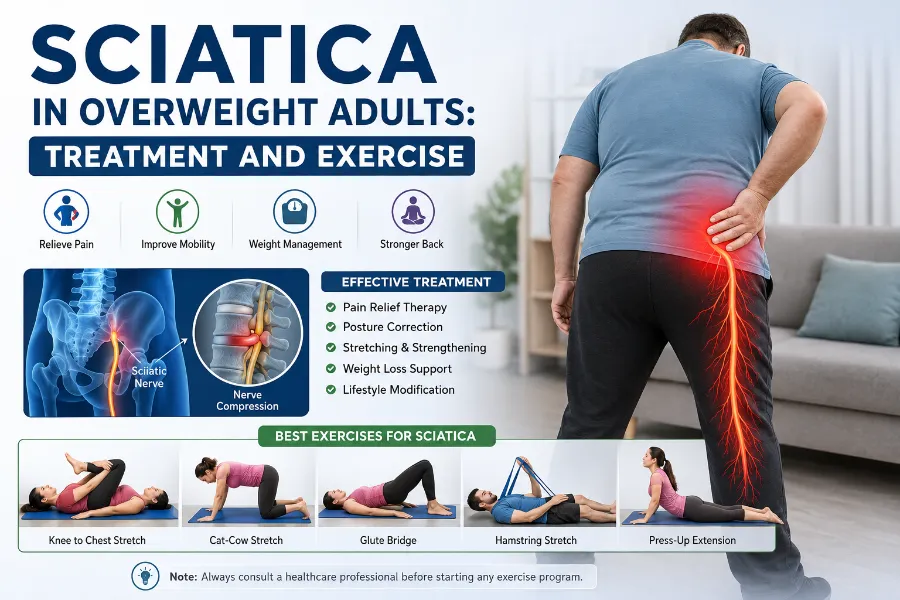
Sciatica in Overweight Adults: Treatment and Exercise
Sciatica occurs when the sciatic nerve—running from the lower back through the hips and down each leg—becomes compressed or irritated, causing pain, numbness, or tingling that radiates along its path.
Adults who are overweight face particular difficulties since being overweight puts more mechanical strain on the lumbar spine and intervertebral discs, which frequently speeds up disc degeneration or herniation—common underlying causes of sciatic nerve compression. Furthermore, too much adipose tissue may worsen nerve irritation and delay healing by causing systemic inflammation.
What is Sciatica?
Sciatica is the term used to describe pain that travels down the sciatic nerve, which starts in the lower back, passes through the hips, and travels down each leg. When compressed or inflamed, the body’s longest nerve can produce a variety of symptoms. One side of the body is usually affected by sciatica, which can cause mild to severe pain that frequently feels like a burning or shooting sensation from the lower back to the foot.
Compression of the sciatic nerve causes radiculopathy, a neurological disorder in which the pinched nerve roots cause pain, tingling, numbness, or weakening in the muscles. Sciatica is not a disease; rather, it is an indication of an underlying problem, such as spinal stenosis or a herniated disc.
What is sciatica in overweight adults?
The goal of sciatica treatment for overweight individuals is to lessen pressure on the sciatic nerve through the combination of safe, low-impact workouts with non-surgical medicinal alternatives and lifestyle modifications.
Common Causes of Sciatica Pain:
Numerous underlying disorders might cause sciatica pain. Herniated discs, which happen when the soft center of a spinal disc pushes through a fracture in the stronger outer layer and impacts against the neighboring sciatic nerve, are one frequent cause.
Pain radiates from the lower back to the legs as a result of this pressure. Spinal stenosis, a disorder marked by a narrowing of the spinal canal that causes pressure on the spinal cord and nerves, particularly the sciatic nerve, is another cause. This frequently results in lower back pain that radiates to the legs.
Many people question whether sciatica is caused by being overweight. Excess weight can aggravate sciatica pain by increasing the strain on the spine and contributing to diseases like herniated discs and spinal stenosis; however, it may not be the only cause.
Another significant issue is degenerative disc disease, which causes sciatica pain because, as people age, their spinal discs lose height and suppleness, leaving them more susceptible to damage and nerve compression.
Furthermore, piriformis syndrome happens when the sciatic nerve is irritated or compressed by the piriformis muscle in the buttocks, resulting in pain, especially when sitting or lying down.
Symptoms of Sciatica:
Depending on the severity and cause of the nerve compression, sciatica symptoms may differ; however, they usually include:
Burning Pain: A burning or severe pain that goes down the leg and can be aggravated by standing, sitting, or lifting heavy objects.
Numbness or Tingling: Pins and needles or numbness in the lower back, legs, or feet are common symptoms of sciatica.
Muscle Weakness: Leg muscle weakness caused by sciatic nerve compression can make it challenging to stand, walk, or even carry out basic duties.
Shooting Pain: An immediate, severe pain that travels down the leg and is frequently caused by particular positions or motions.
The Link Between Excess Weight and Sciatica Pain:
Being overweight puts extra strain on the spine and nerves, which is one of the main reasons for sciatica symptoms. The strain that excess weight, particularly abdominal weight, puts on the spine and discs can make sciatica symptoms severe.
To reduce pain and avoid further symptoms, weight control is essential. Let’s investigate the relationship between sciatica pain and being overweight.
How Extra Weight Strains Your Spine:
Your center of gravity is shifted by excess weight, particularly around the abdomen, which can result in poor posture and spinal alignment. The tension on the spinal column and spinal discs is increased when the spine is misaligned, which increases the process of degeneration. Additional physical strain can lead to lower back misalignment, which can compress nerves, especially the sciatic nerve.
Overweight or obese people are more likely to need hospitalization for sciatica, according to research. In particular, being fat (odds ratio: 1.38) and overweight (odds ratio: 1.16) considerably raises the risk of sciatica-related hospitalization.
This demonstrates how being overweight can affect the severity of sciatica, possibly resulting in more severe pain and consequences requiring medical attention. The risks of sciatica, such as the need for emergency care or more surgical treatments, can be decreased by maintaining a healthy weight.
Inflammation and Nerve Compression:
Chronic inflammation is closely associated with obesity and contributes significantly to the severity of sciatica. Sciatica’s characteristic burning and shooting sensations can be aggravated by inflammation in the body, which can also cause nerve irritation and discomfort. Additionally, extra weight raises the possibility of disorders like ruptured discs and bone spurs, which increase lower back nerve compression.
Additionally, pinched nerves caused by obesity may increase sciatica symptoms. The buildup of fat, especially around the belly, puts additional strain on the spine, resulting in misalignment of the spine and compression of the sciatic nerve. Chronic sciatic pain, which is challenging to treat without treating root causes such as inflammation and weight, can occur from this condition.
Research on Obesity and Sciatica:
Overweight sciatica is clearly associated with a higher chance of having sciatica pain, according to numerous studies. For example, studies show that obesity increases the risk of chronic sciatic pain because it puts greater strain on the spine and causes inflammation.
How Weight Loss Promotes Sciatica Pain Relief:
Losing weight reduces pressure on the sciatic nerve and decreases physical strain, which is important for those with sciatica who are overweight. Losing extra weight can reduce nerve compression and lessen the severity of sciatica symptoms by relieving pressure on your spine and spinal discs. Losing weight may improve mobility and posture, which lowers the chance of recurrent symptoms. Here are a few ways that losing weight can offer long-term relief.
Spinal Pressure Reduction with Weight Loss:
The strain on the lower back and spine could be reduced by losing extra weight. Losing weight relieves pressure on the spinal discs, which lowers the chance of nerve compression and disc herniation. This can greatly lessen sciatica-related discomfort and enhance spinal alignment, making it simpler to move and carry out daily tasks. Furthermore, sciatica typically affects people in their 40s and 50s, with overweight people having a significantly greater incidence.
The spine naturally decreases with age, but being overweight may speed up this process and make a person more at risk for diseases like spinal stenosis or ruptured discs, which frequently cause sciatica. Sciatica and the discomfort it causes are worsened by being overweight, which puts more strain on the lower back. Therefore, especially for middle-aged people, decreasing weight can help prevent sciatica from developing or getting worse.
Improved Mobility and Reduced Symptoms:
Your body can move more easily and comfortably as a result of losing extra weight. Losing weight can improve the strength and flexibility of the core muscles, which reduces the chance of stretching them and making sciatica painful. Sciatica symptoms like numbness and acute pain may decrease with increased flexibility, improving function and mobility.
Long-Term Health Benefits:
Losing weight has long-term health advantages besides relieving sciatica. In addition to lowering the chance of developing further musculoskeletal issues like spinal stenosis or herniated discs, maintaining a healthy weight can stop sciatica pain from returning. Maintaining a healthy weight helps prevent lower back strain and nerve compression, both of which can worsen sciatica symptoms over time.
Safe Exercises and Lifestyle Tips for Sciatica Relief:
Sciatica pain can be considerably reduced by combining safe exercise, lifestyle modifications, and weight loss. For those with sciatica, low-impact exercises like yoga, swimming, and walking are especially beneficial since they relieve the strain on the spine and increase general strength and flexibility.
Additionally, by lowering inflammation and reducing tension in the muscles surrounding the sciatic nerve, these activities improve circulation. Austin-based Manual Therapy provides specific physical therapy programs that treat sciatica pain for more focused care. Particular workout exercises, spine alignment methods, and hands-on therapy to lessen inflammation and nerve compression are all part of their overall, comprehensive approach.
Manual Therapy assists patients in recovering control over their symptoms and achieving long-term treatment by emphasizing the strengthening of core muscles and the restoration of mobility.
Low-Impact Exercises for Sciatica:
Low-impact activities are great for sciatica therapy since they develop the muscles without putting excessive strain on the spine or sciatic nerve. Swimming, which uses the buoyancy of the water to support the body and lessen physical strain on the spine while offering a full-body workout that increases strength and flexibility, is one of the suggested exercises.
Another easy, low-impact activity that helps control weight and circulation while lowering inflammation and easing sciatica pain is walking. Yoga helps increase range of motion and lessen muscle strain, especially in the lower back and pelvic area, with its gentle stretches and poses. Yoga also promotes relaxation, which may help with sciatica’s neurological pain.
Diet Tips for Reducing Weight and Inflammation:
A healthy diet is essential for losing weight and lowering the inflammation that causes sciatica. Incorporating anti-inflammatory foods, such as omega-3-rich alternatives like salmon, flaxseeds, and walnuts, can help lower systemic inflammation and improve pain management. Additionally, adopting a nutritious diet that includes lean proteins, fruits, vegetables, and whole grains promotes weight loss and lowers inflammation.
This eating plan helps establish a calorie deficit, which can help in obtaining and maintaining a healthy weight. Controlling portion sizes is also crucial since it helps avoid overeating and gaining extra weight, both of which may aggravate sciatica symptoms.
Importance of Personalized Physical Therapy:
A physical therapist can create an exercise regimen specifically for you based on your medical history and condition. Physical therapy reduces lower back pain and stops more nerve compression by strengthening the core muscles and correcting the position of the spine.
A thorough treatment strategy that lessens pain and inflammation may also include treatments like electrical impulse therapy, laser therapy, or osteopathic manipulative therapy.
Summary:
Being overweight may worsen sciatica pain because of increased strain on the spine and inflammation that irritates the sciatic nerve. Any sciatica treatment plan requires weight control because it helps to improve spine alignment, reduce pain, and decrease spinal strain.
Sciatica sufferers can enhance their quality of life and obtain long-lasting pain relief by combining weight loss, low-impact exercise, nutritional strategies, and individualized physical treatment.
FAQs
How much does weight affect sciatica pain relief?
Excess weight directly contributes to the pressure on the spine and sciatic nerve, worsening sciatica pain. Losing weight through calorie restriction and low-impact activities can dramatically lessen this pressure and improve discomfort.
What are the most effective low-impact workouts for sciatica if I’m overweight?
Swimming, walking, and yoga are good low-impact activities that can improve strength, flexibility, and range of motion, all of which help minimize muscular tension and sciatica pain. Swimming is particularly healthy because the buoyancy of the water supports the body and relieves pressure on the joints and spine. Yoga improves posture, relieves tension in the lower back and hip muscles, which frequently contribute to sciatica discomfort, and helps with mild stretching and strengthening.
Does sciatica pain go away just by decreasing weight?
Losing weight is crucial for controlling sciatica pain, but it might not be sufficient. A holistic strategy that includes physical therapy, inflammation control, and therapeutic alternatives like injections of epidural steroids or spinal decompression may be necessary for full relief.
References:
- Sciatica. (2025, September 24). Cleveland Clinic. https://my.clevelandclinic.org/health/diseases/12792-sciatica
- Cscs, B. F. J. P. D. O. (2022, September 29). Stretches and Exercises to Ease Sciatica Pain, from a PT. Hospital for Special Surgery. https://www.hss.edu/health-library/move-better/sciatica-stretches
- Website, N. (2024, August 6). Exercises for sciatica problems. nhs.uk. https://www.nhs.uk/live-well/exercise/exercises-sciatica-problems/