Low-Impact Cardio for Obese Beginners
Introduction
People may believe that losing weight is the primary objective of exercise for obesity. That isn’t always the case, though. Regardless of size or whether it results in weight reduction, exercise has major positive effects on one’s physical and emotional well-being.
Furthermore, bodyweight is not a good indicator of physical fitness. Individuals with comparable body mass indices (BMIs) might differ greatly in their talents. Some people may not need to start slowly or modify exercises to match their bodies when they are first starting a fitness regimen.
Do you want to be in shape again, but your weight prevents you from engaging in all the physical activities and exercises you used to be able to? Even if you might not be able to pump iron, jog a few miles, or ride your bike for hours like you used to, there are low-impact workouts for fat starters that are ideal for everyone! One of the finest things you can do for your health, flexibility, and general well-being is to exercise regularly in addition to eating a healthy diet.
However, if you are fat, it might be challenging to know where to begin because the majority of activities are made for people who aren’t dealing with health problems like you. Before undergoing bariatric surgery, you might even need to shed a few pounds.
It might seem like a vicious cycle: you want to exercise to reduce your weight, but are unable to do so, believe that your weight prevents you from doing so, or have never exercised in your life. But you may start along the path to a better living with these low-impact workouts for fat beginners.
Low Impact Workout for Obese Beginners
Low-impact exercises are a great option for those with obesity who are just starting, since they
offer a milder form of exercise while reducing joint stress. When performing these exercises, keep in mind to start gently and pay attention to your body:
- Walking
- Swimming
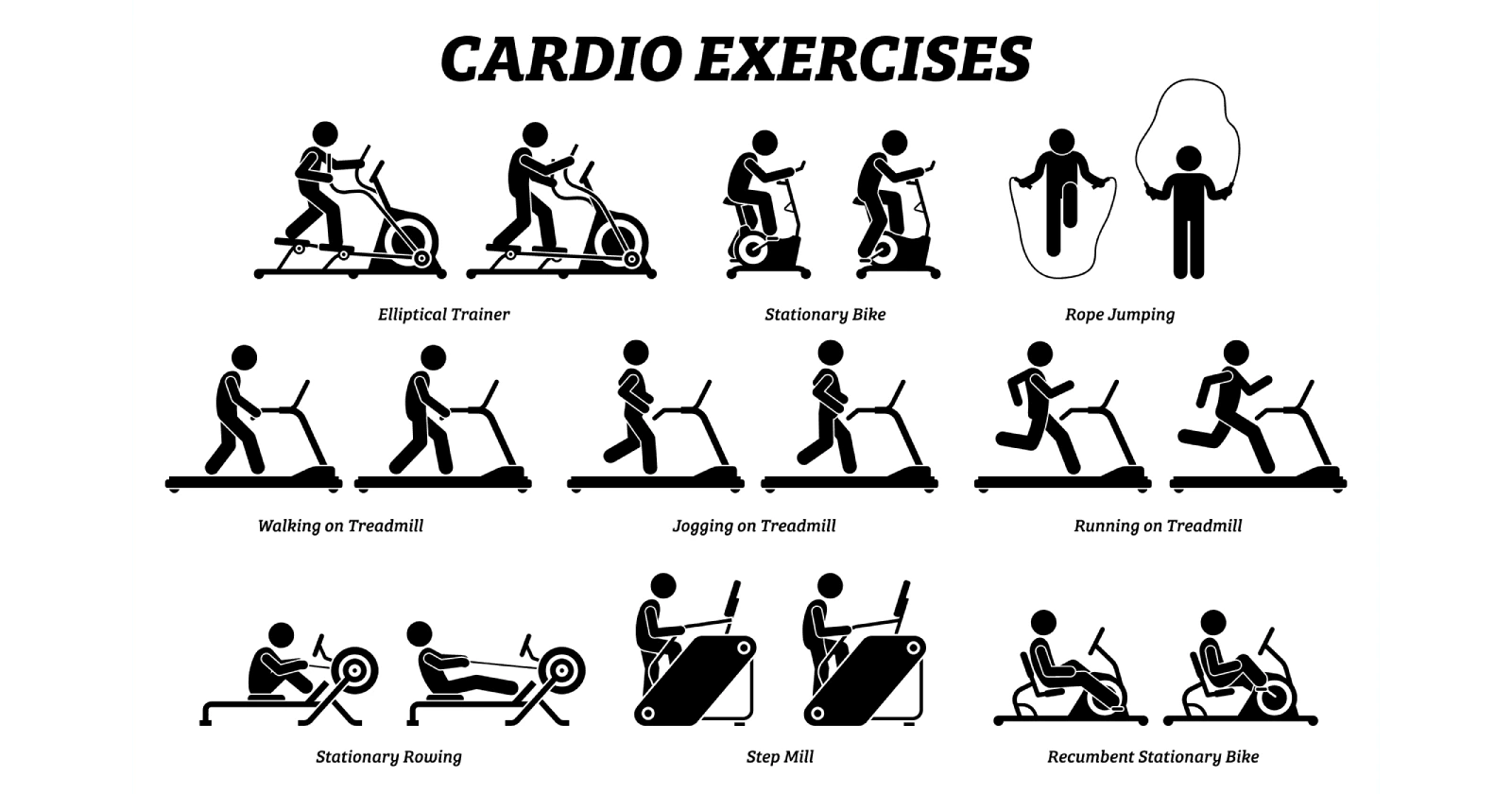
- Cycling
- Elliptical Training
- Yoga,
- Tai Chi,
- Pilates,
- Chair Exercises, and
- Resistance Bands
Walking
It may be an effective kind of workout in addition to being an opportunity to get away from computers and electronics. You can customize your walk to your present level of fitness by starting with shorter, more leisurely walks and working your way up to 30 minutes every day. Gradually increase the time and intensity as your endurance increases to produce a demanding exercise that leaves you feeling energized and refreshed.
Swimming

Even if you’re simply walking around in the water, swimming is an excellent full-body workout for fat people trying to protect their joints. Water aerobics lessons are a great way to burn calories in the water and provide a different take on swimming for people who want to switch things up.
Cycling
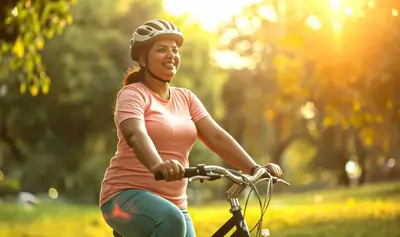
Bicycling is an excellent way to improve your cardiovascular health, strengthen your leg muscles, and get a low-impact workout. Whether you’re fat, it’s a fantastic way to go outside and be active. Don’t worry if you’re not ready to go out on the road; a stationary bike is a wonderful substitute.
Elliptical Trainer
In addition to offering a full-body exercise, it’s a low-impact, joint-friendly choice that’s ideal for fat people. Whether you’re a novice or an expert, you may customize the workout to your own fitness level by changing the resistance. Most gyms have these machines, which makes them a simple and accessible choice for anyone who wants to improve their level of fitness.
Low impact jumping jack
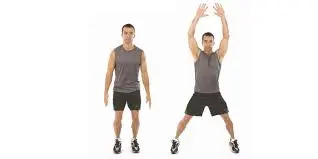
To improve blood flow, move your muscles, and prepare your joints for exercise, low-impact jumping jacks are an excellent warm-up.
To move:
- Standing with your arms by your sides.
- Raise your right arm above your head while you extend your right foot. Throughout this exercise, maintain your weight in your left foot.
- Go back to where you were.
- Step out with your left foot right away. Raise your left arm above your head while keeping your weight on your right foot.
- Go back to where you were.
You can hold tiny weights in each hand or exaggerate the arm motions to make it harder.
Speed skaters
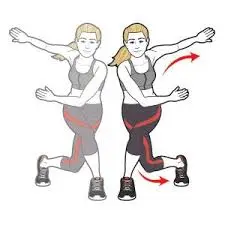
Your cardiovascular fitness, lower body strength, and balance can be enhanced with low-impact speed skating.
To move:
Place your feet shoulder-width apart to begin.
Put your right leg behind you and diagonally across your torso to perform a curtsy lunge. Your right arm should be comfortably bent up at your side for balance, while your left arm should be straight down.
Bring the right leg forward and plant it in the initial squat, then push off the left (front) leg to start standing.
Swing your left leg back and across while switching arms to complete the action.
Try making intentional, fluid, and smooth side-to-side movements like a speed skater on the ice.
Squat to jab
Building full-body strength, enhancing coordination, and boosting cardio fitness can all be achieved by combining a bodyweight squat with boxing moves like jabs and crosses.
To begin moving:
To begin, stand with your arms by your sides and your feet slightly wider than shoulder-width apart.
Make sure your knees are out, your butt is back, and your chest is up when you squat.
Get up, stretch your legs, and use both arms to deliver a cross-body punch.
Punch, get up, and squat down once again.
Standing oblique crunch
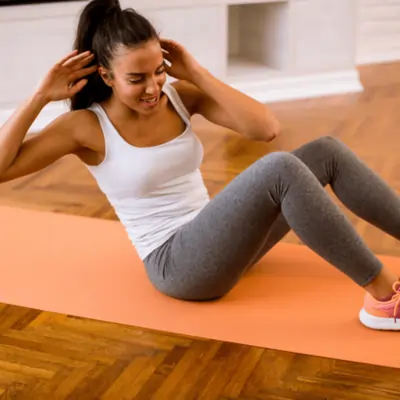
Popular abdominal workouts that are frequently done while lying down are oblique crunches. However, doing them while standing may more successfully target the glutes, back, and core stabilizer muscles, enhancing general strength, balance, and mobility.
To move:
Start by positioning your feet shoulder-width apart, extending your elbows to the side, bending your arms, and placing your hands behind your head.
Start the exercise by bending to your right side and raising your right knee to contact it while lowering your elbow.
Go back to where you were. On the left side, use the same procedure.
For best results, make sure the movement is regulated, and your core is active.
Lateral shuffle
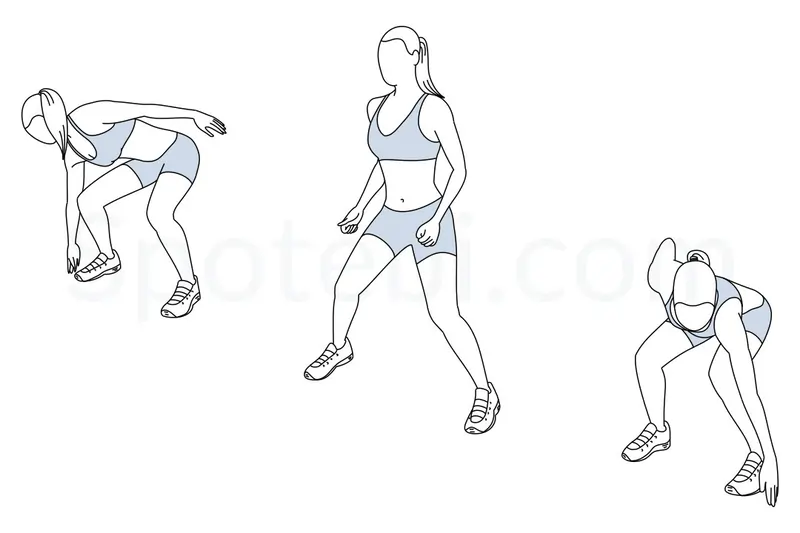
By going side to side while staying in the frontal plane, the lateral shuffle strengthens your lower body muscles. Strength, coordination, and balance can all be improved with an exercise circuit that targets muscles in different directions, such as the frontal and sagittal planes.
To move:
To begin, stand with your feet shoulder-width apart, your arms comfortably in front of you, your knees slightly bent, and your hips slightly bent to maintain a forward stance.
To move your body to the right, shift your weight to the right, pick up your right foot, and push off with your left foot. During this exercise, keep your form while moving as fast as you can.
Repeat, bringing your feet back together and using your left foot to propel yourself as you “shuffle” to the right.
To make sure you’re working both legs equally, fill your one minute of working time by shuffling right for a certain amount of time or distance, then shuffling left for the same amount of time or distance.
Low Impact Workout for Obese Beginners:
Yoga
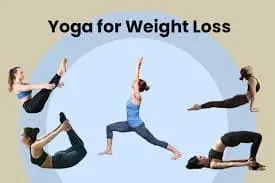
Yoga, which emphasizes flexibility, balance, and relaxation, is a great workout choice for fat beginners. This low-impact exercise is a great option for people who are just beginning to lose weight since it can be adjusted to match different fitness levels. It’s simple to find an online video lesson or beginner-friendly yoga session; all you need is a yoga mat!
Tai Chi
Balance, flexibility, and relaxation are all greatly enhanced by the potent practice of tai chi, which is crucial for both physical and mental wellness. People of various fitness levels may benefit from Tai Chi, which is one of its many wonderful features. Tai Chi can meet you where you are, whether you’re young or elderly, sporty or just seeking a way to be active.
Pilates
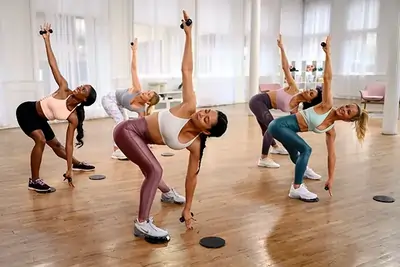
Pilates is a low-impact workout that targets posture, flexibility, and core strength. It can enhance general body awareness, and sessions can be designed to accommodate any fitness level and body size. Similar to yoga and tai chi, there is no equipment required, and you may begin almost at any moment (as long as your doctor gives the all-clear).
Chair Exercises
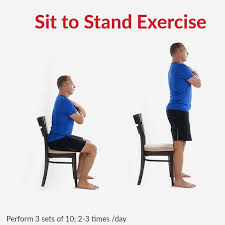
You can use a solid chair to perform sitting exercises if mobility is an issue. Leg lifts, marches, and side leg lifts while seated are all included in this category.
These exercises don’t need you to leave the house, they put very little strain on your joints, and you may even do them while watching TV. A great approach to get back into the swing of things and develop a fitness regimen that is simple to maintain.
Resistance Bands
Adding resistance bands to your exercise regimen might help you gain strength without overstressing your joints. They may be used while sitting or standing, and they have several resistance levels.
They are also reasonably priced in terms of equipment. Resistance bands are intended to gradually reintroduce you to exercising muscles that you may not have utilized in a long time. They are frequently used while individuals are recovering from injuries.
FAQs
What exercises should obese people avoid?
However, it seems that not all forms of exercise are appropriate for those who are obese! Running and jumping are examples of high-impact activities that are severely restricted for obese individuals.
Soccer, volleyball, jumping rope, marathons, and even jogging are examples of such activities.
How to increase stamina if you are overweight?
Stepping. Walking is the best low-impact workout.
A swim. Perhaps the finest workout for the heart, lungs, and skeleton is swimming.
a bicycle. Bicycling is a great way to burn calories without straining your joints.
strength training.
How long should an obese person walk?
For those who are fat, walking is a great kind of exercise. Walking for 30 minutes a day, a few days a week, should be the first step in a walking program. Gradually increase the amount of time you spend walking on most days of the week.
Which exercise is best for obese people?
While most physical exercise can aid in weight loss, the researchers discovered that jogging, mountain climbing, walking, power walking, dancing, and extended yoga sessions were the most effective ways
for persons with a genetic tendency to obesity to maintain a healthy weight.
What is the first step for obese people to lose weight?
Modify your diet.
Start by keeping a record of everything you consume. To lose around one pound per week, you must cut 500 calories per day; to lose roughly two pounds per week, you must cut 1,000 calories per day. Once you’ve lost at least 10% of your body weight, think about increasing your physical activity.
How to get energy when obese?
Make sure you’re receiving adequate rest.
Obese people frequently complain that they lack the energy needed to work out, go for a run, or visit the gym. A balanced diet is crucial for ensuring you have enough energy to lose weight, but getting adequate sleep every night is the basis.
What are the 4 M’s of obesity?
Metabolic, mental, mechanical, and monetary aspects are the four “Ms.”
References:
- Villines, Z. (2023, May 22). Exercise for people with obesity. https://www.medicalnewstoday.com/articles/exercise-for-obese-people#getting-started
- Best Low-Impact Cardio Workouts for fat loss: Burn calories without joint pain | Fitness First blog. (n.d.). Fitness First Indonesia. https://www.fitnessfirst.com/ph/en/blog/top-7-low-impact-cardio-workouts-for-fat-loss
- Hoppers, T. (2024, February 27). Low-impact workout for obese beginners. WeightWise. https://weightwise.com/blogs/blog/low-impact-workout-for-obese-beginners?srsltid=AfmBOop3zm0CXD5JuL22ep53ivgkvLIy7T9Wv3JHITnjmy9H4DR3-ZTz
- Davis, N. (2026, April 1). 6 low-impact cardio exercises in 20 minutes or less. Healthline. https://www.healthline.com/health/fitness-exercise/low-impact-cardio