
How Physiotherapists Design Fat Loss Workouts?
Introduction
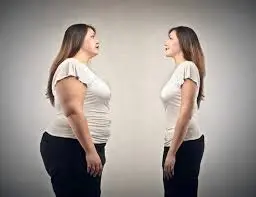
It can be very stressful to begin a weight loss journey because there is so much information available about what to do and what not to do. Choosing the appropriate strategy is the most crucial step in starting a weight loss journey. Physiotherapy can play a crucial—yet frequently disregarded—role in assisting you in achieving your goals more successfully and sustainably, even if food and exercise are frequently the main focus.
Some people may find the weight loss process to be slow and disheartening. Even with dietary and activity modifications, people may not get the desired results and struggle to maintain the lifestyle change and weight loss on their own. Therefore, when searching for a method to reduce weight, people frequently turn to gyms or exercise instructors for direction and support.
It is well known that physiotherapy can help with pain or injury, but few people know that it can also aid with weight loss.
Physiotherapy may offer individualized support to make sure you’re moving in a way that maximizes your potential, regardless of whether you’re just starting or feel like you’re not making any progress.
A physiotherapist can help you maximize your exercise regimen, lower your risk of injury, and increase your general movement efficiency by addressing underlying problems like bad posture, muscle imbalances, or past injuries.
Additionally, physiotherapy gives you mobility and pain management techniques, which make it simpler to maintain consistency and motivation.
This blog post will explain how physiotherapy can help you prioritize your health and well-being while supporting your weight reduction journey and enabling you to achieve long-lasting results!
What is physical therapy?
Physiotherapy is a branch of medicine that focuses on assisting patients in regaining, preserving, and enhancing their mobility and physical function. Additionally, it might serve as a prophylactic treatment for injuries. By using a variety of methods, including manual treatment, exercise, and education, physiotherapists can help patients with pain and discomfort as well as treat and prevent injuries.
To meet your unique needs or goals—whether it’s to play a sport you enjoy or to be able to move more freely in the community—physiotherapists are highly trained to deliver specific examinations and treatment regimens.
The primary objective of a physiotherapist is to help you move more freely, lead a healthy lifestyle, and enhance your quality of life. If you are interested in any of these objectives, schedule a consultation with a physiotherapy specialist right now!
Can Physiotherapy Help in Losing Weight?
Because physiotherapy increases strength, improves mobility, and helps you create effective, healthy movement patterns, it can help you lose weight.
Although it’s not a certain way to lose weight, physiotherapists may create customized workout regimens that increase metabolism, focus on specific muscle areas, and improve general physical fitness!
Physiotherapy can decrease the chance of injury, improve mobility, and help people stay active by treating underlying physical limitations such as joint pain or muscle weakness. This can make it simpler for you to stay motivated and stick to a regular exercise schedule, both of which, over time, aid in weight loss. Contact one of our physiotherapy specialists to begin your journey now.
How Can Physical Therapy Help With Weight Loss?
In short, physiotherapy helps people lose weight by assisting them in doing safe, efficient workouts that are customized to their needs and preferences.
Physiotherapists create individualized plans that focus on important muscle groups, enhance cardiovascular health, and increase metabolism.
Additionally, they aid in enhancing posture, flexibility, and movement patterns, all of which can facilitate and optimize physical activity.
Physiotherapy helps people stay active longer and prevent injuries by managing pain or physical restrictions, which is essential for long-term weight loss. In order to complement a comprehensive weight loss plan, physiotherapists also provide training on healthy body mechanics and lifestyle changes.
Which Exercises in Physiotherapy Are Most Effective for Losing Weight?
Exercises used in physical therapy can be very beneficial for weight loss since they help you move safely and effectively while focusing on the main muscle areas that burn fat. Exercises that strengthen the core, like planks or deadbugs, are excellent for enhancing stability and posture, which can increase the effectiveness of high-intensity training. The core is the starting point for all weight training!
Strengthening your legs and glutes through functional exercises like squats, lunges, and step-ups is essential for boosting your metabolism and assisting fat-burning activities like cycling, walking, and running. Additionally, because they work the entire body without causing undue strain or impact, low-impact activities like swimming are great for people with joint problems.
By customizing these exercises to your fitness level and individual requirements, a physiotherapist can help you stay consistent on your weight loss journey while also guaranteeing a safe and efficient workout and preventing injury. Your physiotherapist will also modify the exercises to make them harder as you gain strength, so that you may keep losing weight and gaining power!
Benefits of exercise and a personalised programme
In every weight loss regimen, exercise is one of the most crucial elements. It is more beneficial to your general health than dieting alone.
By burning calories and gaining muscle mass, it’s also an excellent method of weight loss that will help you keep the weight you’ve lost. You burn more calories even when you are not exercising since exercise raises your metabolism.
You will get the most out of your physiotherapy sessions if you have a customized program made to fit your unique demands. We are all different in our own special ways; this will be different for everyone. As an example, the following evaluation must be completed to design a customized and appropriate program for you:
- Goals and current levels of physical activity
- Identification of risk factors
- Range of motion of joints
- Strength in the upper and lower limbs
- Equilibrium
- Analysis of body composition displaying body fat percentage and muscle mass (in kg)
- Analysis of posture during exercise
- Test of fitness
- The rate of metabolism at rest
As long as the person is prepared to invest the time and energy necessary to get results, they can be made for people of any age or fitness level.
Physiotherapy management
An evidence-based strategy is suggested for the treatment of overweight and obesity through physical therapy.
- Evaluation of the patient’s medical background
- An assessment of the level of physical activity at the moment
- Offering a personalized schedule of physical exercise
- Progressive enhancement of an exercise regimen
- A cardiovascular training program’s prescription
- Resistance training recommendations
- moderate-intensity exercise prescription, 30 minutes each day, 3–5 days per week
Exercise not only aids in weight loss but also improves mood, strengthens bones, and lowers the risk of numerous persistent diseases.
The Best Exercises for Weight Loss
Walking
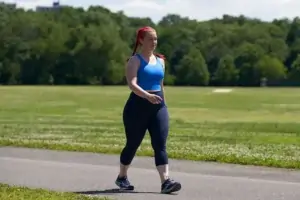
It’s a quick and simple way for newcomers to begin working out without feeling overwhelmed or having to buy any equipment. Additionally, it is a lower-impact exercise, which means your joints won’t be overworked.
A 12-week trial of 20 obese women revealed that walking for 50–70 minutes three times a week decreased waist circumference and body fat by an average of 1.1 inches (2.8 cm) and 1.5%, respectively.
Including walking in your regular regimen is simple. Try taking the stairs at work, walking during your lunch break, or taking your dog for extra walks to increase your daily step count.
Start with a 30-minute walk three or four times a week. As your fitness improves, you can gradually increase the number of your walks.
Jogging or Running
Exercises like running and jogging are excellent for weight loss.
Despite their apparent similarities, a jogging pace typically ranges from 4 to 6 mph (6.4 to 9.7 km/h), but a running pace exceeds 6 mph (9.7 km/h).
Additionally, running and jogging have been shown in trials to aid in the burning of visceral fat, or abdominal fat. This kind of fat encircles your internal organs and is associated with a number of chronic conditions, including diabetes and heart disease.
Running and jogging are both fantastic exercises that you can do anywhere and that you can easily include in your weekly schedule. To begin, try to jog three to four times a week for 20 to 30 minutes.
If you find that running or jogging outside strains your joints, consider running on grass or another softer surface. It may also be a lesser strain on your joints because many treadmills come with built-in padding.
Weight training
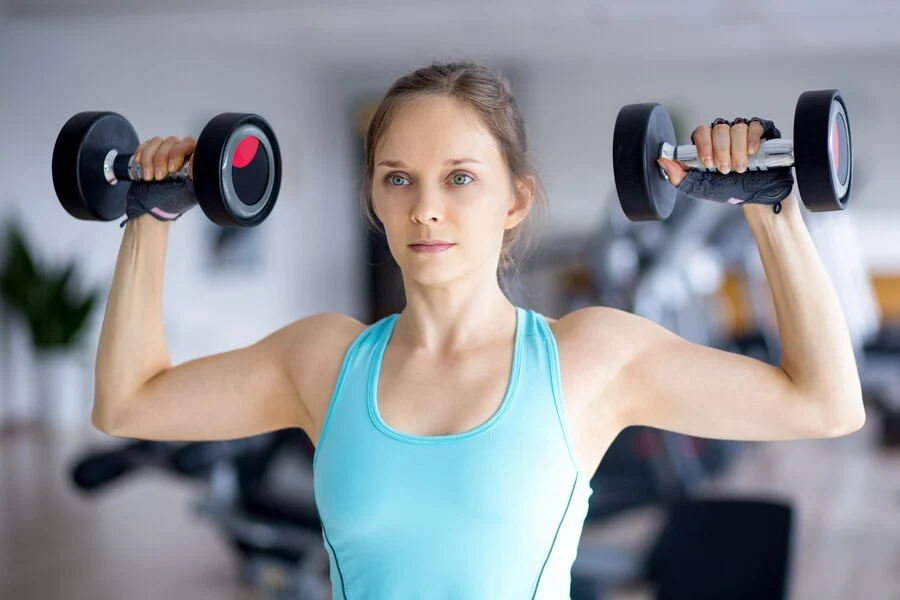
A common option for those trying to reduce their weight is weight training.
Additionally, lifting weights can increase your strength and muscle mass, which will increase your resting metabolic rate (RMR), or the number of calories your body burns while at rest.
According to another study, males who had 24 weeks of weight training saw a 9% rise in their metabolic rate, or around 140 extra calories burned daily. The metabolic rate of women increased by over 4%, or 50 more calories per day.
Studies have also revealed that, in contrast to aerobic exercise, your body continues to burn calories for many hours after a weight-training session.
Interval training

High-intensity interval training (HIIT), another name for interval training, is a general term for brief bursts of vigorous exercise interspersed with rest intervals.
An HIIT workout may burn a lot of calories and typically lasts 10 to 30 minutes.
HIIT burns 25–30% more calories per minute than other forms of exercise, such as weight training, cycling, and treadmill jogging, according to a study involving 9 active males.
That means you can work out for less time and burn more calories with HIIT.
Additionally, it has been demonstrated in multiple studies that HIIT is particularly effective at burning belly fat, which is linked to a number of chronic conditions.
Incorporating HIIT into your workout regimen is simple. Just pick an exercise, like running, jumping, or riding, and schedule your workouts and rest periods.
Take a bike and cycle as hard as you can for 30 seconds, then pedal slowly for 1 to 2 minutes. Do this for 10 to 30 minutes.
Cycling

Cycling is growing more and more popular, and it’s really easy to integrate into your schedule because you can do it on a stationary bike or on the road.
According to Harvard Health, a 70-kg person may burn about 260 calories on a stationary bike at a moderate pace or 298 calories on an outdoor bicycle for 30 minutes.
In addition to being a fantastic way to lose weight, research has shown that regular cyclists have higher insulin sensitivity, better general fitness, and a decreased risk of heart disease, cancer, and death than non-riders.
Like walking, cycling has little impact, making it a viable choice for those who are tired of their joints.
Swimming

In addition to being a fun activity in the water, swimming is a fantastic form of fitness.
An average person swimming for 30 minutes should expect to burn between 233 and 409 calories, although this can vary depending on their swimming technique (stroke, intensity, etc.).
Swimming is a low-impact, relaxing, and reasonably priced option to consider when looking for the best workouts for weight loss.
Yoga

Yoga is a well-liked form of physical activity and stress relief.
It burns a good number of calories and has numerous other health benefits that can aid in weight loss, even though it’s not typically considered a weight loss exercise.
The yoga group also reported improvements in their physical and mental health.
Yoga can teach mindfulness and lower stress levels in addition to burning calories, according to studies.
You can do yoga practically anyplace, and it’s a wonderful way to lose weight.
Pilates
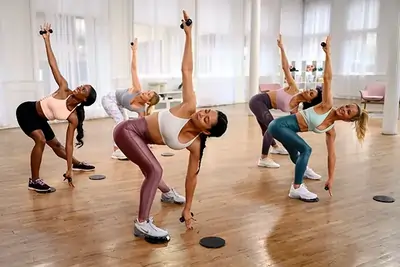
Pilates is a fantastic, low-impact workout that can help you lose weight.
Many individuals find Pilates fun, which makes it easier to persist with over time, even if it might not burn as many calories as cardiovascular workouts like running.
Pilates can increase your strength, balance, flexibility, endurance, and general level of fitness in addition to helping you lose weight.
Pilates is an excellent, beginner-friendly workout that can help you improve other aspects of your physical fitness and reduce weight.
Your weekly weight loss goal should not exceed 0.5 kg. In the short term, losing weight more quickly is beneficial, but it is very hard to sustain, and people typically gain it back later.
There are more advantages to exercise than just burning calories. Frequent exercise raises anti- inflammatory chemicals in the body and decreases inflammatory chemicals, which may help lessen pain.
Exercise only accounts for 10–20% of weight loss, according to research, whereas dietary changes account for 60–80%.
FAQs
What is the role of a physiotherapist in weight loss?
In order to ensure safe and efficient progress toward weight loss objectives, physiotherapists are essential in developing individualized exercise regimens based on each patient’s fitness level, medical history, and any current injuries.
Is physiotherapy better than the gym?
The solution to the physiotherapy vs. gym debate is to use each for its own strengths rather than switching between the two. Strength training and general fitness can be achieved at the gym. When you’re hurt, in pain, or require expert advice, physiotherapy is crucial.
Which 30-minute workout burns the most fat?
HIIT, or high-intensity interval training Including high-intensity interval training (HIIT) in your exercise regimen can help you lose weight quickly and increase your level of fitness.
Bodyweight Strength Blast. Tabata Circuit….
A session of cardio kickboxing….
Full-Body AMRAP (the maximum number of rounds)
What are common mistakes in fat-burning workouts?
relying solely on exercise to lose weight.
assuming the number of calories you’ve burned from a fitness device.
after working out, stuffing oneself with junk food.
doing no strength training and just aerobics.
What is the most successful weight loss method?
Brisk walking and other forms of continuous cardiovascular exercise are among the best methods for reducing body fat. Every day of the week, try to get in at least 30 minutes of aerobic exercise. For some people to lose weight and maintain it, greater exercise may be required. At least twice a week, try to perform strength training activities as well.
References:
- Protected, E. (2022, August 24). How to Lose Weight with Physiotherapy – Heart & Lung Physio – Cardiopulmonary Specialist Physiotherapy Clinic in Singapore. Heart & Lung Physio – Cardiopulmonary Specialist Physiotherapy Clinic in Singapore. https://heartandlungphysio.com/2022/08/24/how-to-lose-weight-with-physiotherapy/
- Precision Physio. (2024, May 27). The best exercises for weight loss. https://www.precisionphysio.com.au/the-best-exercises-for-weight-loss/
- Vadim Kalganov. (2023, May 12). Physiotherapy for weight loss | Physiotherapy and Osteopathy in Jersey and Northampton. Physiotherapy and Osteopathy in Jersey and Northampton | Registered Osteopath and Physiotherapist in Jersey and Northampton. https://www.colganosteo.com/physiotherapy-for-weight-loss/
- (2026 Feb 21). https://teamnutrition.ca/blog-nutritionist-dietitian/how-physiotherapy-can-support-your-weight-loss-journey