

Weight Loss Exercise For Slipped Disc Patients
Introduction
Living with a herniated disc can be quite difficult because it frequently results in physical restrictions and persistent pain that can interfere with day-to-day activities. When a spinal disc’s soft inner gel pushes through a tear in its stronger outer layer, it results in a herniated disc, which causes pain and limits movement. For those who have this disease, controlling their weight becomes essential. Being overweight can exacerbate symptoms by putting more strain on the spine; therefore, controlling weight is not just a health objective but also essential.
Most people who have a herniated disk don’t require surgery. Physical therapy is frequently advised by doctors to treat herniated disk problems.
Herniation can occur in any disk in the spine, including the neck, but it most frequently happens in the lower back. Depending on where the herniated disk is, different workouts may be beneficial.
The first line of treatment for a herniated disc is frequently exercise. Depending on where the affected spinal disc is located, a herniated disc may cause a variety of symptoms, such as pain, numbness, burning, and weakness in the arms or legs.
In the days following a herniation, exercises may be initiated. Strengthening activities may be advised when your symptoms improve.
Your spine’s vertebrae are separated and cushioned by round, pillow-like structures called spinal discs. When the solid outer layer, known as the annulus, is pushed through by the gelatinous interior of one of these discs, known as the nucleus, a herniation results.
Millions of individuals worldwide suffer from herniated discs, which may be an excruciating and limiting ailment. The impact on the lower back may severely hamper one’s capacity to operate and enjoy daily life. Exercise has become a vital part of the healing process, even if there are many other therapy alternatives.
This article describes the best stretches and exercises for treating a disc herniation in the neck or back.
What is a Herniated Disk (Slipped Disc)?
A herniated disk is a common spinal problem that occurs when the structures stop creating the disk material that cushions and protects each disk of the spine from external pressure. Disk collapse and dehydration result from it. Instead of surgery, specialists frequently advise prevention and rehabilitation.
When one of the rubbery cushions (disks) between the various bones (vertebrae) that stack up to form your spine is damaged, it results in a herniated disk. Pain, tightness, numbness, weakness, and tingling in the back, legs, and feet are common signs of herniated discs and are important to diagnose. By offering a customized exercise regimen that emphasizes strength, flexibility, and good posture to reduce symptoms and prevent further injuries, a physical therapist can play a crucial role in the rehabilitation process.
A rubbery or jelly-like substance protrudes from the inner ring through the outer ring of the disc in a persistent medical disease known as a slipped disc or herniated disc.
Severe back pain results from this. A stuck substance may occasionally additionally compress nearby nerves, causing numbness and hip and leg pain.
A slipped disc can occur for several reasons, including improper sitting and standing posture, any type of injury, or unusual bodily movements.
Do you also experience chronic pain as a result of your slipped disc? Many approaches can be used to treat slipped discs. You must take several medications, adhere to a diet that may not be enjoyable, and engage in regular exercise. As a final choice, open surgery is required.
Don’t worry, there are natural remedies for herniated discs, such as yoga therapy. All you have to do is speak with us about the issue and receive the best natural remedies if you want to avoid having surgery and spending days in the hospital.
How Losing Weight Can Help Treat a Herniated Disc
At Advanced Spine, we’ve observed that some of our patients are terrified when they hear the term “herniated disc.” This is due to the fact that we haven’t yet informed them that surgery isn’t always necessary to solve their issue. When we tell them they have herniated discs, it’s simply the first thing that comes to mind.
However, there are more conservative approaches to treating a herniated disc. Before using the surgical option, we always aim to take our patients to non-invasive therapy. That is a best practice, as any competent clinician would tell you.
Weight loss by diet and exercise is often suggested as a non-invasive treatment. Being overweight poses a threat to your whole body. As far as we are concerned, it is not an aesthetic issue. Herniated discs, joint pain, diabetes, and cardiac issues can all result from this health issue.
Therefore, we advise patients who are over their recommended weight to lose weight to address herniated disc pain. Although it may not be well-liked by some of our patients, it is an effective strategy that aids in the recovery of many of them.
Why Your Weight Matters
It is rarely beneficial to have too much of anything. The same is true of being overweight. When you are overweight, the strain that the extra pounds are putting on your body may manifest in health issues.
Losing weight can be beneficial in treating herniated disc pain, but it might be a component of a more involved strategy that includes medication or physical therapy. However, you will definitely benefit from dietary and exercise adjustments, not just for your herniated disc but also for your general health.
You are most likely already seeing a physician or therapist if you are aware that you have a herniated disc. If that isn’t the case, you must be.
Some disc herniations do need surgery, while others can heal on their own. If you choose to lose weight to cure herniated disc pain, follow your doctor’s instructions. It’s time to stop and seek advice if exercising causes pain. Surgery could be necessary to move forward.
The benefits of losing weight when having a herniated disc
Starting a weight loss journey while taking care of a herniated disc has two advantages. Losing weight improves general spinal health in addition to relieving pain by lowering spinal pressure. For people looking for relief from the pain caused by a herniated disc, this dual approach is crucial.
Achieving these advantages without making the situation worse requires including a low-impact, safe workout regimen. Customized workouts can support weight loss and assist in sustaining fitness levels while being easy on the back.
Exercises for Herniated Disc Recovery
After a disc herniation, it’s critical to avoid bed rest and to continue being active. Start out slowly and concentrate on making painless, smooth movements. Focus especially on the methods that help your problems shift from your arms and legs to your spine.
Exercises for neck pain
After a slipped disk, neck pain is frequently experienced. Neck and shoulder muscular pain might result from pressure on the neck’s nerves. Shooting pain down the arm is another possible side effect. A slipped disk in the neck or upper spine can cause neck pain, which can be relieved with the following exercise.
Neck stretches
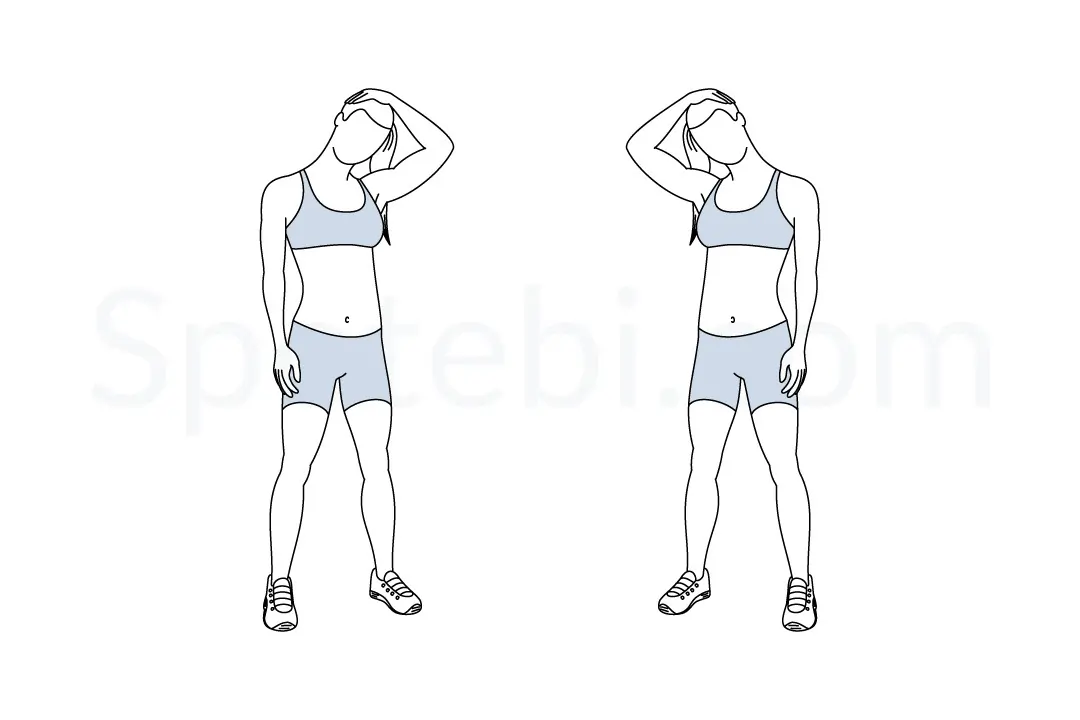
The following exercise can be used to reduce pressure and pain from a herniated disk close to the neck:
- Stretch your neck by moving your chin toward your chest and then back against the headrest while sitting straight in a chair.
- After moving the left ear in the direction of the left shoulder, move the right ear in the direction of the right shoulder.
- This pattern should be repeated multiple times.
Cervical Retraction

When a disc herniation occurs in the cervical (neck) region of the spine, this exercise helps reduce the symptoms. Do cervical retraction in this way:
- Look straight ahead while sitting in a chair with your arms by your sides.
- Tuck your chin back a little, as if you were giving yourself a double chin, without shrugging your shoulders or nodding your head.
- After holding this posture for one to two seconds, release your neck. Finish ten retractions.
Lateral Neck Flexion
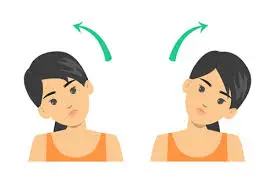
It has been demonstrated that this method lessens the effects of a cervical spine disc herniation. Here’s how to perform lateral neck flexion:
- Bend your ear slowly toward the shoulder on the affected side of your neck while maintaining a straight gaze. When you do this, avoid shrugging your shoulders.
- Move your neck as far as you can without experiencing further pain, then hold it there for a brief moment before going back to the beginning position.
- Perform two or three sets of ten reps.
Shoulder Row
The scapular muscles that encircle the shoulder blades are the focus of shoulder rows. Maintaining the strength of this region helps ease the strain on your neck’s discs.
Do it like this:
- Hold onto one end of a resistance band with each hand while securing it in a door.
- Squeeze your shoulder blades together while pulling your arms backward. Make sure you don’t shrug your shoulders while doing this.
- Do two or three sets of ten rows.
Pectoral Stretch
Preventing forward-shoulder posture and reducing neck pain can be achieved by stretching your chest’s pectoral muscles. Do it like this:
- Place your forearms on either side of the door frame while standing inside.
- Lean your body forward gradually until the front of your shoulders and chest start to feel a slight pull.
- Hold this posture for 15 to 30 seconds, then attempt three times.
Shoulder roll

To roll your shoulders:
- Sit or stand erect, keeping your arms at your sides.
- Gently raise and lower the shoulders circularly as you roll them forward. Continue for around thirty seconds.
- The shoulder roll should be repeated in the other direction.
Exercises to Strengthen a Lower Back Herniated Disc
Numerous studies have demonstrated that strengthening exercises can help persons with herniated discs function better and feel less pain.
Strengthening activities should begin as soon as your initial symptoms begin to subside. Your neck and back will be more stable and supported by these techniques. Additionally, they may prevent aggravation of your disc herniation symptoms.
To increase your overall strength, try these exercises.
Backward Bend
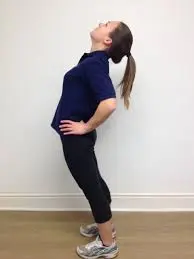
If you have a low back herniation and have trouble getting on the floor, the simple backward bend exercise may help you heal. Follow these steps to do it:
- Keep your feet shoulder-width apart and place your hands on your waist.
- Without locking your knees, bend back as much as you can.
- Hold this position for a while, then straighten up again. Try two or four repeats.
Plank Variations for a Strong Core
To do a simple plank:
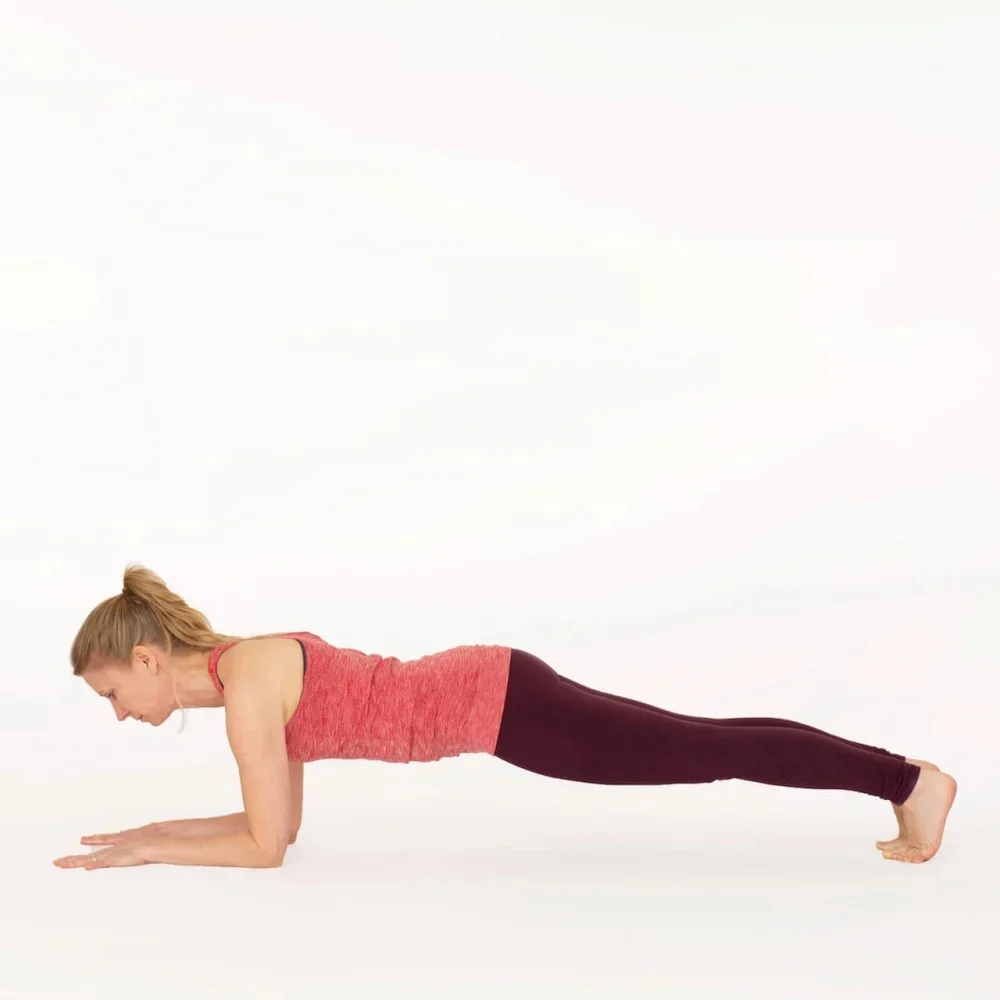
- To start, lie face down with your forearms and toes on the floor.
- Use your core to keep your head and heels in a straight line.
- As your power increases, progressively raise the position duration from 20 to 30 seconds.
Bridging Exercises to Stabilize the Lower Back

Performing a simple bridge:
- Bend your knees and place your feet flat on the floor while lying on your back.
- Raise your hips off the floor so that your knees and shoulders form a straight line.
- Hold your hips for a few seconds, then let go again.
Pelvic Tilts and Hip Exercises for Improved Stability
For pelvic tilts:
- lying on your back, bend your knees and maintain your feet flat on the floor.
- Press your lower back against the ground and gently tilt your pelvis upward.
- Hold for a little period of time, then release and repeat.
Leg Raises and Extensions for Lower Body Strength

To perform leg raises:
- Raise your arms above your head while lying on your stomach.
- Raise your left leg off the ground and hold it there for a short duration while maintaining a straight posture.
- Slowly lower one leg, then go on to the other.
Side Plank
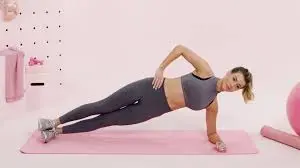
The objectives of the core exercise outlined below are to target the gluteus medius muscle on the side of your hip and the oblique muscles in your stomach:
Side Plank steps:
- With your knees straight and your forearm under your shoulder, lie on your side on the floor.
- Lift your hips and knees without letting your body tilt back.
- Hold this posture for 15 to 30 seconds before lowering yourself to the floor.
- Perform two or three side planks on each side of your body.
Bird Dog
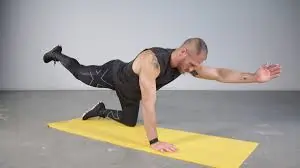
This method targets the muscles in your midsection, glutes, and shoulder blades by assessing your postural stability. To perform a bird dog:
- Put yourself on your knees.
- Tighten your abdominal muscles while you flatten your lower back.
- Raise one arm in front of you while extending the opposing leg behind you.
- Hold this position for five seconds, then repeat the exercise with the other arm and leg.
- Repeat ten times on each side.
Dead Bug
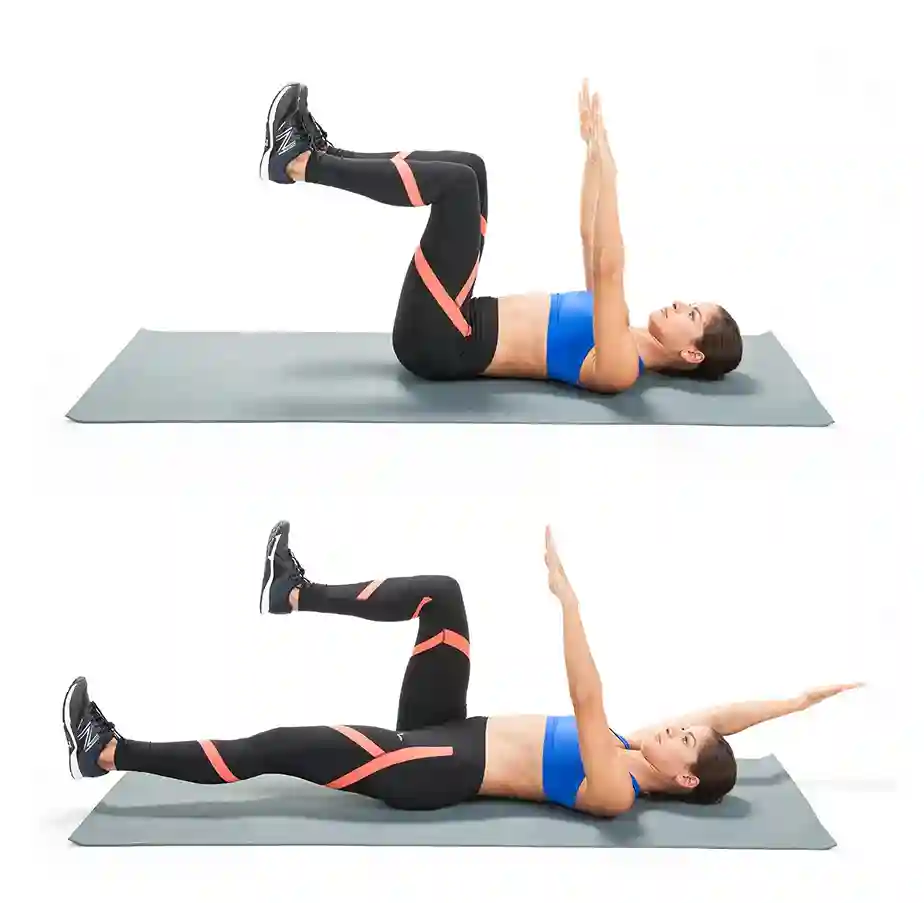
This challenging exercise targets the transverse abdominus muscle, which is situated deep within your stomach. Proceed as follows:
- Lying on your back.
- Bend your knees.
- Keep your feet on the floor.
- Flatten your lower back against the floor by contracting the muscles in your stomach.
- Bring both arms up to the ceiling.
- At a time, lift one foot a few inches off the ground. While doing this, raise the arm on the same side a few inches above your head.
- Lower your arm and foot to their initial positions, then repeat the action on the other side.
- Continue carefully switching from side to side until you have completed 15 reps with each arm and leg.
Strength and flexibility routines for spinal health
You may lose weight and keep your spine healthy by incorporating strength and flexibility exercises into your routine. These exercises strengthen the core and improve flexibility, both of which are essential for maintaining a healthy back.
Flexibility and Mobility Exercises for a Herniated Disc in the Lower Back
Along with strengthening exercises, stretching may help reduce the symptoms of a disc herniation. It’s important to begin cautiously and avoid forcing unpleasant movements, just like with any method. Try using these methods:
Hamstring Stretches for Improved Flexibility
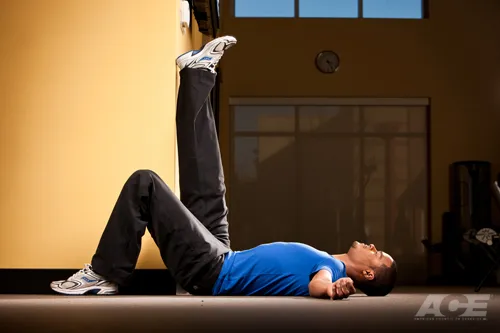
Hamstring tightness is common in people with lower back pain. According to a study published in the Journal of Physical Therapy Science, regular hamstring stretching significantly reduces pain and disability in patients with lumbar radiculopathy caused by herniated discs.
For hamstring stretching:
- One leg should be stretched, and the other should be bent while you sit on the floor.
- Stretch the extended foot gently by reaching forward with both hands.
- Stretch for 20 to 30 seconds.
- Then switch sides.
Cat-Camel Stretches for Spinal Mobility
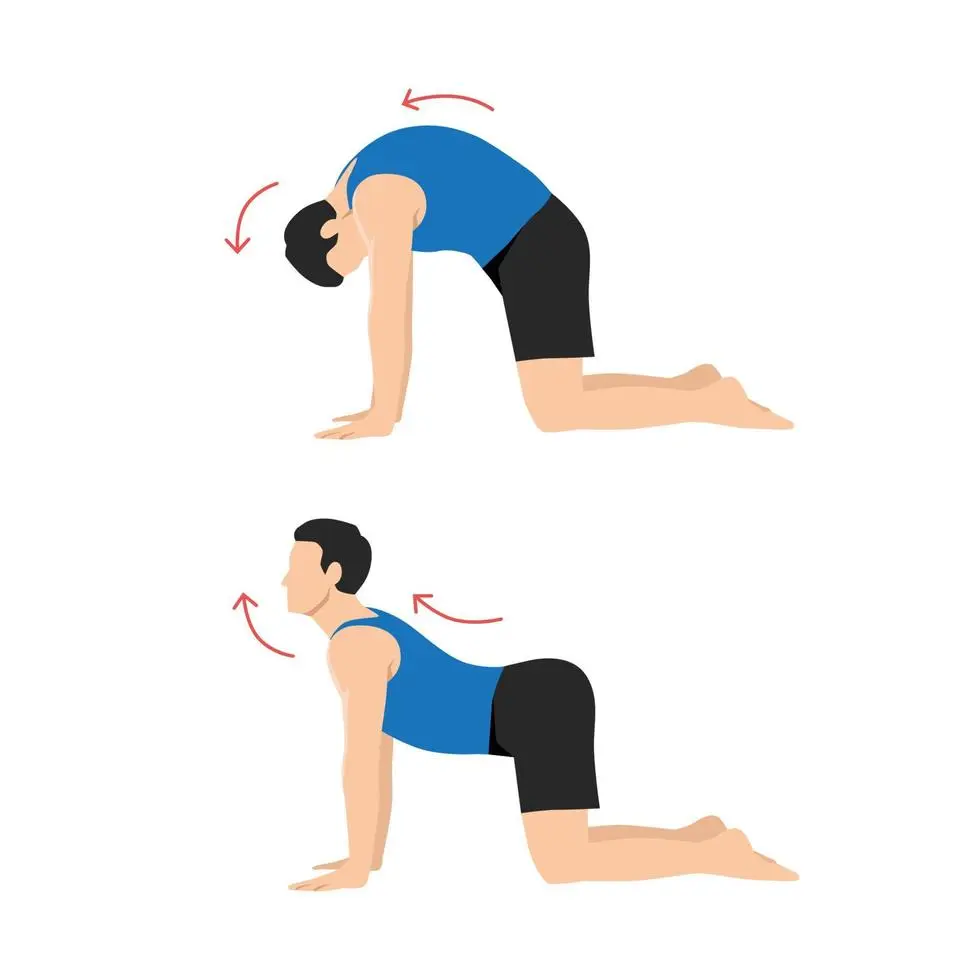
Physical therapists advise doing cat-camel stretches to increase the spine’s flexibility and mobility. For people with low back pain, particularly those with herniated discs, these multifidus muscle exercises can help lessen pain and enhance functional outcomes.
To stretch like a cat or a camel:
- Put yourself in a tabletop position, on your hands and knees.
- Make a camel-like curve by lowering your back after arching it upward like a cat.
- Focus on your spine’s range of motion as you carefully repeat the motions.
Piriformis Stretch
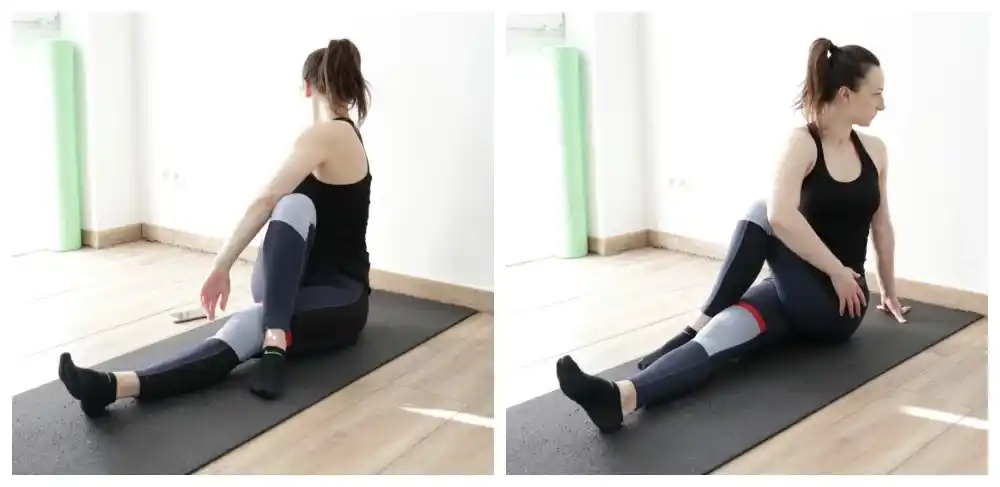
Buttock soreness is a common symptom of low back herniations. This stretch targets the deep piriformis muscle in this area when done as follows:
- With your feet on the ground and your knees bent, lie on your back.
- Place your affected leg’s ankle on your unaffected leg’s knee.
- Pull your unaffected thigh in the direction of your tummy until the affected buttock begins to gently stretch.
- Perform three stretches while maintaining this posture for 15 to 30 seconds.
Knee to chest stretch
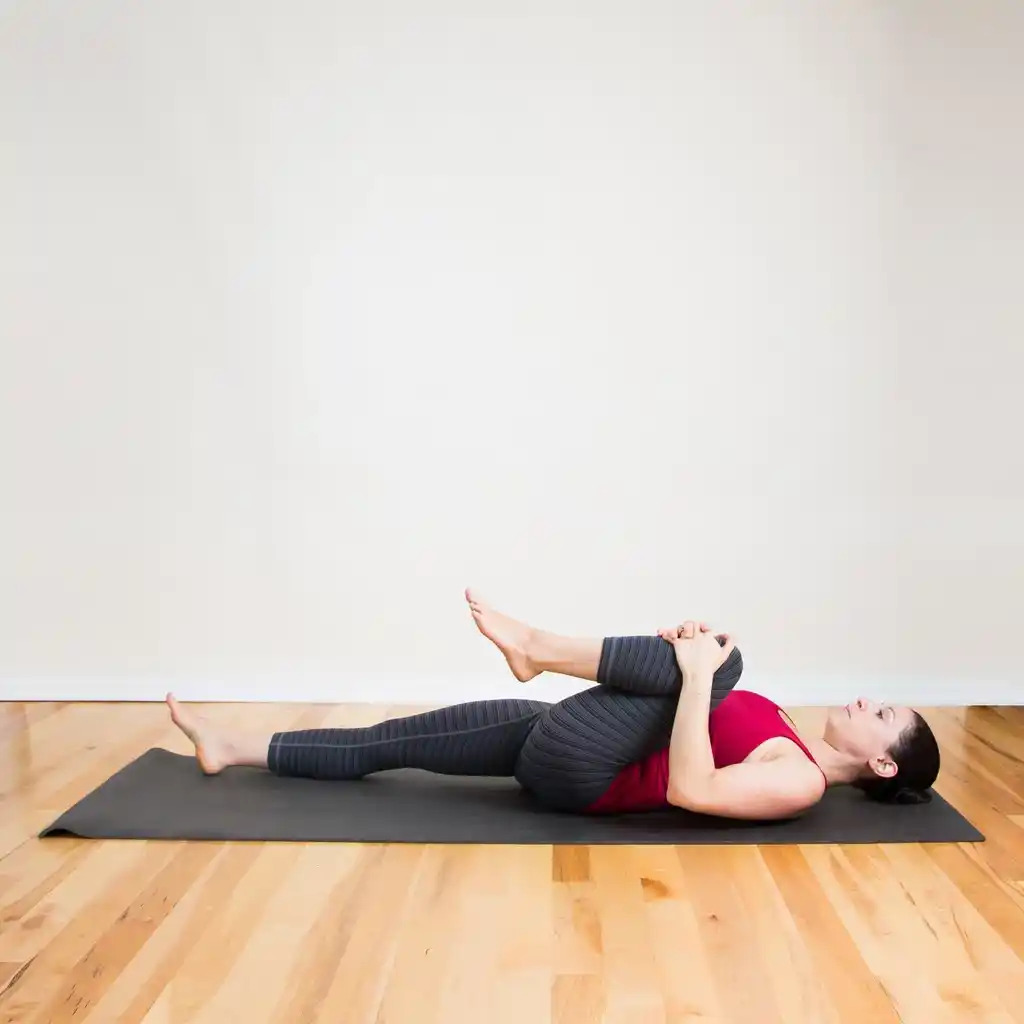
For a more moderate stretch, the knee-to-chest stretch works the muscles on both sides of the body independently. Try the following:
- Bend your knees and place both heels on the ground while lying on your back.
- Pull one knee toward the chest with both hands behind it.
- For 15 to 20 seconds, hold the stretch.
- Repeat many rounds, switching legs.
Quadriceps and Hip Flexor Stretches for Reduced Strain
Tight hip flexors and quadriceps can put extra strain on the lower back. Regular stretching of these muscles can help individuals with low back pain, particularly those with herniated discs, experience less pain and disability.
To stretch these muscles:
- Place your feet hip-width apart.
- As you grip one ankle and pull it towards your buttocks, feel the front of your thigh stretch.
- Repeat on the opposite side after holding the stretch for 20-30 seconds.
Cobra Pose
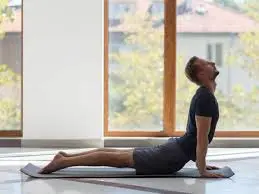
Because it forces the disk material back into its original position and enables it to start the healing process, this pose successfully eliminates back pain related to a herniated disk. This pose is particularly beneficial if you have lower-body problems that are limited to your lower back.
You can perform this pose while lying on your stomach, either as a half stretch or as a full stretch. For a half-stretch, raise yourself on your elbows and secure your hip bones to the ground. Return to your initial posture after holding this stretch for 15 seconds. Ten rounds of this should be done.
Try to support yourself with your hands in a full arm extension once you are comfortable with the half-stretch. Then, slowly raise your torso upward to reach the full extension of the pose.
Trunk rotation
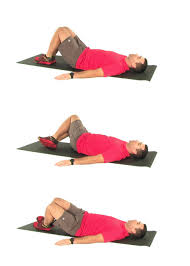
To rotate your trunk:
- Bend your knees while lying on your back, and place your feet flat.
- Gently turn them to the right while maintaining a bent knee position.
- Keep your posture for a little while.
- Knees should be returned to the center.
- Stretch repeatedly on both sides.
Low-impact exercises for those with ruptured discs who want to lose weight
Selecting the appropriate exercises is essential when controlling weight with a herniated disc. Low-impact exercises are the best because they burn calories and improve cardiovascular health while putting less strain on the spine. Let’s investigate a few practical choices.
Walking: a gentle start
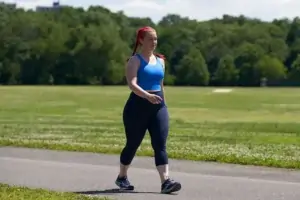
One of the easiest and most accessible activities for those with a herniated disc is walking. This low-impact aerobic exercise helps control weight without putting undue strain on the spine. Walking for at least 250 minutes a week is a recommended regimen that can be divided into smaller, more manageable sessions.
It’s important to progress gradually; start with shorter distances and grow as your endurance and comfort level improve. Walking regularly improves the general health and well-being of the spine in addition to helping with weight loss.
Swimming and aquatic therapy

For people with a herniated disc, swimming and other aquatic workouts are strongly suggested. A full-body workout that enhances cardiovascular health and promotes weight loss is made possible by the buoyancy of water, which lessens the strain on the spine.
Swimming for 30 minutes per day can make a big difference in achieving weight control objectives. Aquatic treatment can successfully relieve back pain and offer a safe setting for exercising, according to scientific studies. Because of this, swimming is a great option for people who want to lose weight without making their condition worse.
Cycling and elliptical training

Effective, low-impact cardiovascular activities include stationary cycling and elliptical machines. By using a variety of muscle groups, these workouts encourage weight loss and calorie burning.
Maintaining good posture is crucial when using these devices to prevent further strain on the spine. To guarantee support and comfort, adjust the handles and seat.
As your level of fitness increases, start at a modest intensity and progressively raise it. Both cycling and elliptical exercise offer safe ways to maintain an active lifestyle and successfully control weight.
Movements and Exercises to Avoid
There are several activities and motions to stay away from if you have symptoms following a disc herniation. These comprise:
- When lifting anything or bending over, round your spine.
- Lifting bulky items or carrying them far from your body
- High-heeled footwear
- Long periods of standing or sitting
- What other activities make you feel more pain?
- Exercises that cause your symptoms to spread (peripheralize) further down into your arms or legs should also be avoided.
- High-Impact Activities: High-impact exercises like running and jumping can worsen a herniated disc and jar the spine. The spinal discs are under a lot of stress from these activities, which increases the risk of further pain and damage.
- Heavy Weightlifting: Excessive strain on your lower back can result from lifting big weights, especially if you do so incorrectly. A herniated disc can be made worse by heavy-weight exercises like deadlifts, squats, and overhead presses.
- Twisting Movements: Exercises that cause the spine to twist, like yoga positions or Russian twists, might make a herniated disc worse. These motions may exacerbate pain and put more strain on the damaged disc.
- Toe Touches and Forward Bends: Toe touches and forward bends are examples of bending forward from the waist that might place excessive strain on the lower back. These motions may make a herniated disc more painful and uncomfortable.
- Sit-Ups and Crunches: The lumbar spine may be under more strain with traditional sit-ups and crunches. These exercises can exacerbate a herniated disc since they frequently require flexing the spine. Choose back-friendly exercise like planks to improve your core.
FAQs
How to lose weight with a slipped disc?
Exercise serves two purposes: it improves spinal support and helps with weight loss. For those who are overweight, low-impact hobbies like walking, cycling, and swimming are great. Exercises that strengthen the core enhance stability and posture while lessening strain on the spinal discs.
What exercise is good for slipped discs?
In order to reduce pain and strengthen the spine, the greatest exercises for a herniated disc concentrate on gentle movement, core strengthening, and spinal mobility. Examples of these exercises include Cat-Cow stretches, Bird-Dog, planks, pelvic tilts, and walking. Important exercises include flexion stretches (such as the Figure-Four/Piriformis Stretch) for the glutes and extension (such as the Prone Extension/Half-Cobra) to drive the disc back. You should also always start slowly, pay attention to your body, and receive your doctor’s consent before starting.
How can you reduce weight if an injury prevents you from exercising?
Slow down and fully chew your food. It’s important today more than ever, even if we keep saying it.
Make use of smaller plates.
Consume protein at each meal.
Keep harmful foods hidden.
Regularly consume water.
Consume more fiber.
Make an effort to continue moving.
How to not gain weight during a back injury?
If you need to reduce your calorie intake, concentrate on cutting back on fats and carbs, but make sure you still consume enough protein to aid in your body’s self-healing. To prevent gaining weight, you may need to gradually change what and how much you consume.
How to lose weight with a spinal injury?
Intermittent fasting, the popularity of keto in the SCI community, adaptive sports, avoiding liquid calories, avoiding processed foods, controlling portion sizes, low-calorie diets, and reducing sugar intake.
Which bodily portion begins to lose weight first?
Although it varies by genetics, age, and hormones, you lose weight first in places like your face, neck, arms, and chest. Women see changes in their hips and thighs first, while men often perceive a reduction in belly fat sooner. Since you can’t spot-reduce fat, general fat loss is crucial. The body prioritizes burning visceral fat (the fat surrounding organs), which is healthy.
References:
- Weight loss to treat herniated disc pain | Advanced Spine care. (n.d.). The Advanced Spine Center | NJ’s Top Doctors in Spine Relief. https://theadvancedspinecenter.com/weight-loss-treat-herniated-disc-pain/
- ActivePosture.co.uk. (2025, April 12). Lose Weight Safely with a Herniated Disc: Gentle Exercises That Work. ActivePosture.co.uk. https://www.activeposture.co.uk/blogs/articles/lose-weight-safely-with-a-herniated-disc-gentle-exercises-that-work?srsltid=AfmBOoqkgaSSYZpGVFNzcQ0kKmrXQzbwZPD4xhkfiAvq6WbmXBAnyL4d
- Ocs, T. P. D. (2025, September 7). 16 Exercises for herniated disc (Back or neck) pain. Verywell Health. https://www.verywellhealth.com/exercises-for-herniated-disc-7642792
- Barrell, A. (2024, October 1). Safe exercises for a herniated disk. https://www.medicalnewstoday.com/articles/324311
- Pneuma. (2025, November 27). Healing from Herniated Disc: Effective Exercises For Herniated Disc in Lower Back – Mainstay Medical. Mainstay Medical. https://mainstaymedical.com/exercises-for-herniated-disc-in-lower-back/
- Mitchell, G. (2024, August 15). Five Safe Exercises for Herniated Disk Back Pain | NJ Spine & Ortho. NJ Spine & Orthopedic. https://www.njspineandortho.com/safe-exercises-for-herniated-disk-back-pain/